
A client is waiting for an urgent contract approval, and you need to send a PDF for signature before the business day ends. In today's fast-paced digital workflows, printing, scanning, and emailing documents back and forth only slows things down. This is where the ability to send a PDF for signature becomes essential for businesses, freelancers, and remote teams alike.
Digital signing not only saves time but also ensures security, legal validity, and smooth collaboration across locations. Whether you're closing deals, approving internal documents, or managing client agreements, learning how to send a PDF for signature efficiently can streamline your entire document process. In this article, you will learn how to send a PDF for signature quickly without relying on printing or scanning.
In this article
- What You'll Accomplish in This Guide
- Smart Signing Choices: Match the Method to the Moment
- Build a Sign-Ready PDF That Gets Approved Faster
- Send, Track, and Verify Signatures with a Single Workflow
- Exploring Alternative Routes for Signing PDFs
- Ensuring Legally Admissible E-Signatures
- Smart Field Design to Minimize Rework
- Reusable Micro-Copy for Signature Requests
Part 1. What You'll Accomplish in This Guide
From preparing documents to validating completed signatures, each step is designed to help you manage the entire PDF signing workflow with confidence and compliance.
- Prepare and Send a Sign-Ready PDF: Learn how to request a signature on a PDF, while adding date and text fields, and monitor the document until it's fully completed.
- Manage Signing Order and Compliance: Discover how to route the PDF to one or multiple signers in a specific order, set automated reminders, and download a detailed audit report for record-keeping.
- Validate and Finalize E-Signatures: Understand how to verify collected e-signatures and digital certificates to ensure authenticity before securely filing the document.
Part 2. Smart Signing Choices: Match the Method to the Moment
Use this decision matrix to select the most efficient way to send a PDF for signature based on your workflow, signer type, and compliance needs. The right choice can significantly improve turnaround time and reduce manual follow-ups.
| Situation | Best Path | Why |
| One signer, informal approval | Email + Fill & Sign | Quickest approach with minimal setup and no routing required |
| Multiple signers and routing | Link-based signature request | Enables ordered signing, automated reminders, and status tracking |
| HR, Legal, or Finance use | Signature request + audit report + validation | Provides traceability, compliance, and legally sound proof |
| Mobile-only recipients | Secure link via email or SMS | Allows signing from any device without installing an app |
| Reusable forms (NDAs, vendor packets) | Templates with pre-placed fields | Minimizes errors and accelerates repeat document workflows |


 G2 Rating: 4.5/5 |
 100% Secure
Part 3. Build a Sign-Ready PDF That Gets Approved Faster
Before learning how to request a signature on a PDF, it's essential to prepare your document correctly to avoid rejections, missed fields, or signer confusion. A well-structured PDF ensures a smooth signing flow and speeds up approvals from the first send.
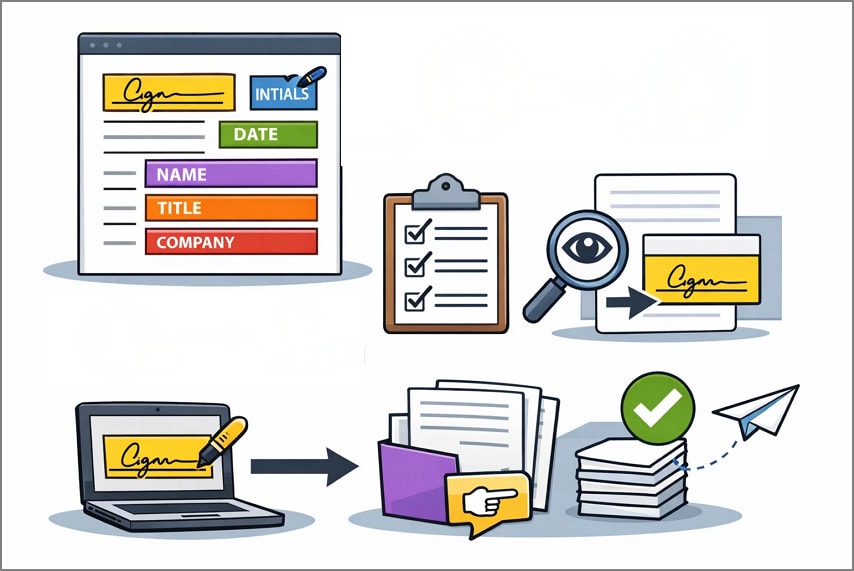
- Insert and Mark Required Fields: Add Signature or Initial fields along with Date, Name, Title, and Company fields, and clearly mark mandatory inputs to prevent incomplete submissions.
- Assign Roles and Control Signing Order: Map each field to a specific role, such as Signer 1 or Signer 2, and define the signing sequence when multiple approvals are required.
- Apply Accessibility and Clarity Rules: Use readable fonts and include guidance text like "Sign here" or "Initial page 2" so signers can complete the document without hesitation.
Part 4. Send, Track, and Verify Signatures with a Single Workflow
Managing e-signatures efficiently requires a tool that combines preparation, sending, tracking, and validation in one streamlined process. Designed for professional document workflows, PDFelement delivers built-in eSign requests, role-based routing, and real-time status tracking to keep approvals moving without delays. Secure links, automated notifications, and detailed audit reports ensure transparency and compliance at every step.
For anyone learning how to send a document for electronic signature, this solution offers a reliable, desktop-focused approach that mirrors real-world business needs. The following section walks through each stage of the signature request workflow, from starting the request to validating the final agreement using PDFelement:
G2 Rating: 4.5/5 |100% Secure
Step 1Begin by Requesting eSign
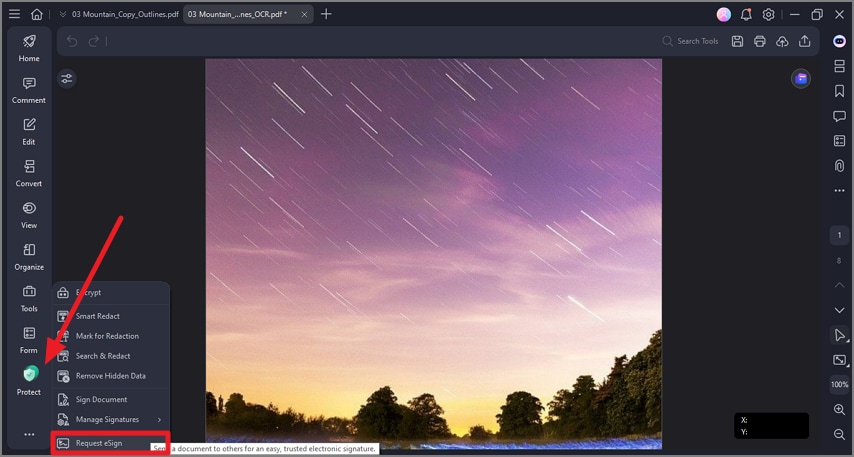
To begin the process, launch PDFelement on your device and open the document that you want to sign. Next, head to the toolbar on the left and press the "Protect" option. Now, select the "Request eSign" option from the list by clicking on it.
Step 2Add Recipients
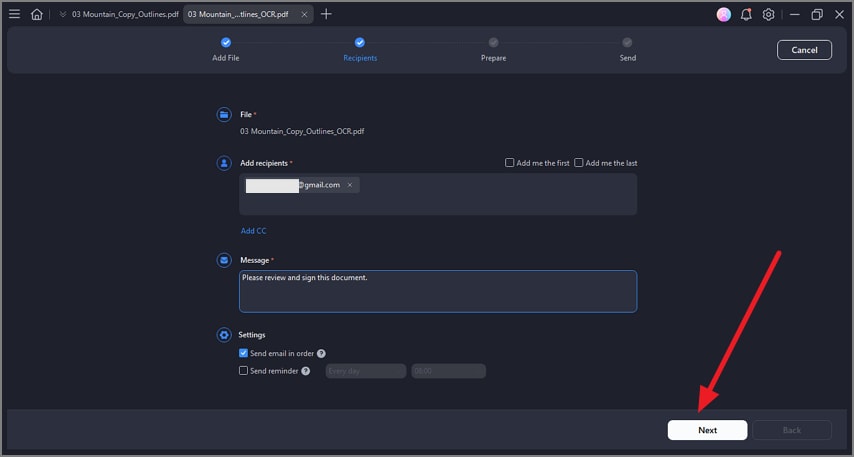
In the following interface, enter all recipient emails in the "Add Recipients" field and drag them to arrange the signing order. Use Add CC to include anyone who should be informed but not required to sign, and select "Add me first" or "Add me last" if you need to countersign. Set the email sending sequence and reminder frequency to ensure timely signing, then click "Next" to proceed to field placement.
Step 3Place and Assign Fields
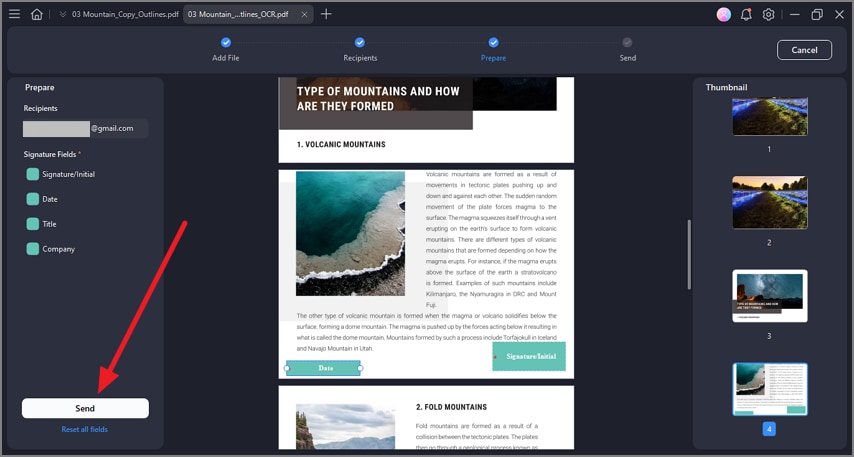
Drag "Signature/Initial," "Date," "Title," and "Company" fields onto the PDF, assigning each to the correct recipient based on their role. Double-check field placement and ensure all required fields are marked, then click "Send" to dispatch secure signing links to all recipients.
G2 Rating: 4.5/5 |100% Secure
Step 4Track Status After Sending
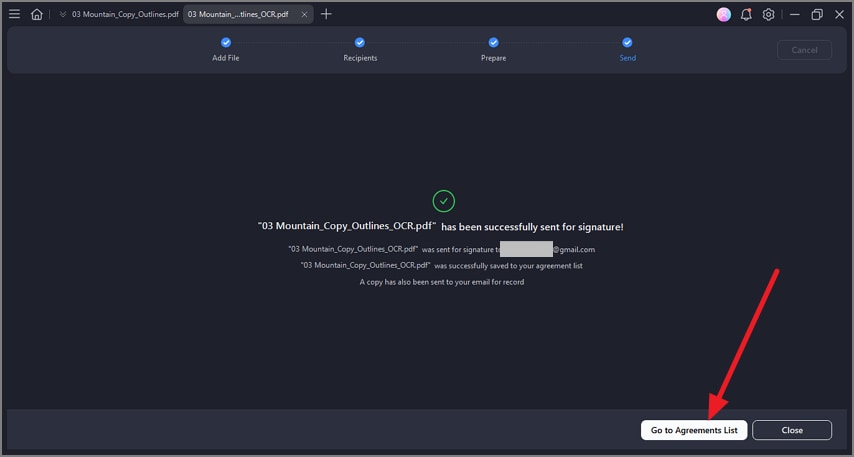
Once the document is sent for signing, press the "Go to Agreements List" to track the document. The recipient will receive an email for the signature, and once the signing process is completed, you will receive an email for that.
Step 5Download Audit Report
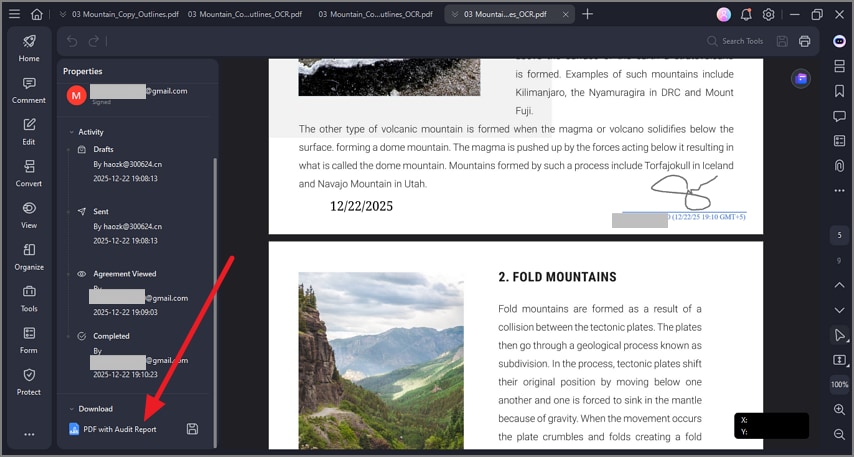
When the document is opened within the interface, head to the bottom-left corner and expand the "Download" option to save the audit report.
Step 6Validate All Signatures
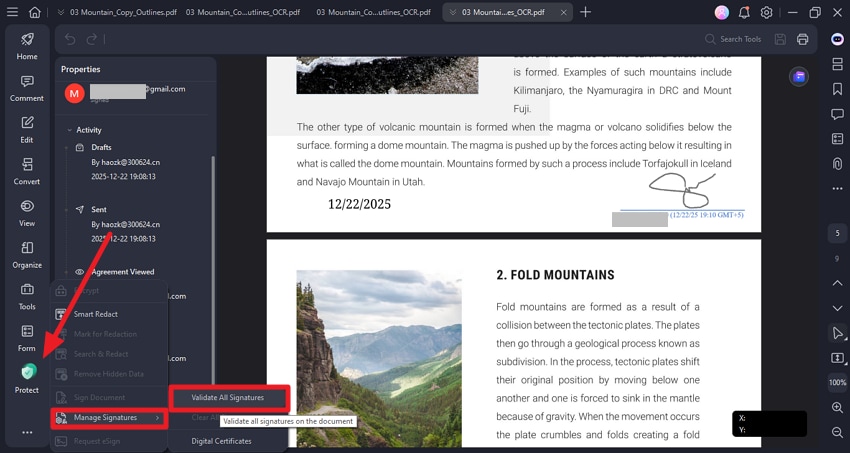
Head to the toolbar on the left again and press the "Protect" option. Now, locate the "Validate All Signatures" option to validate the signature successfully.
Part 5. Exploring Alternative Routes for Signing PDFs
While desktop tools like PDFelement provide a comprehensive e-signature workflow, there are other solutions on how to send PDFs for signature depending on your needs. Here's a brief look at some common options:
Email Attachment
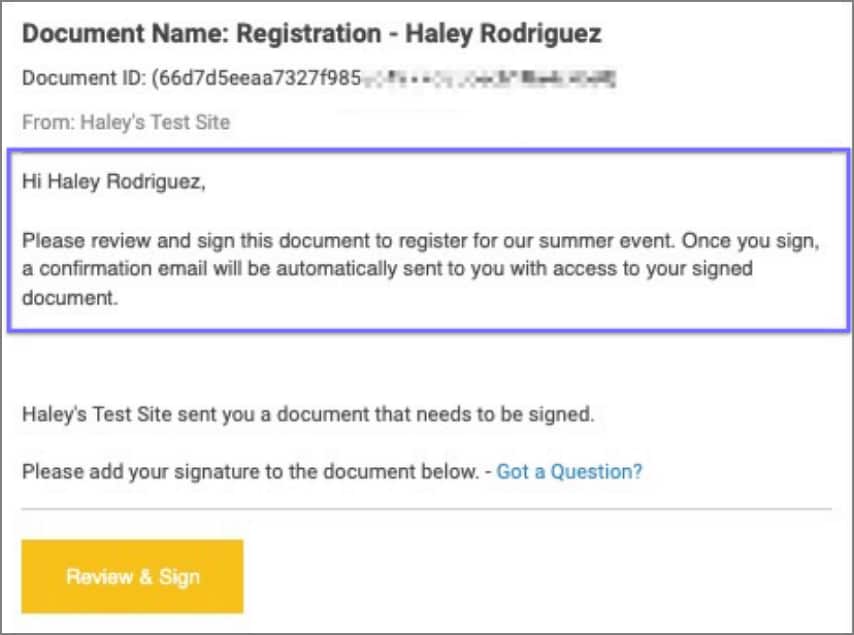
For a single signer, sending a PDF as an email attachment is the simplest approach. Add basic signature and date fields directly in the document, then provide clear instructions for the recipient to complete and return it. Once signed, the PDF is sent back via email. This method is fast and straightforward but offers limited tracking.
Platform Workflow
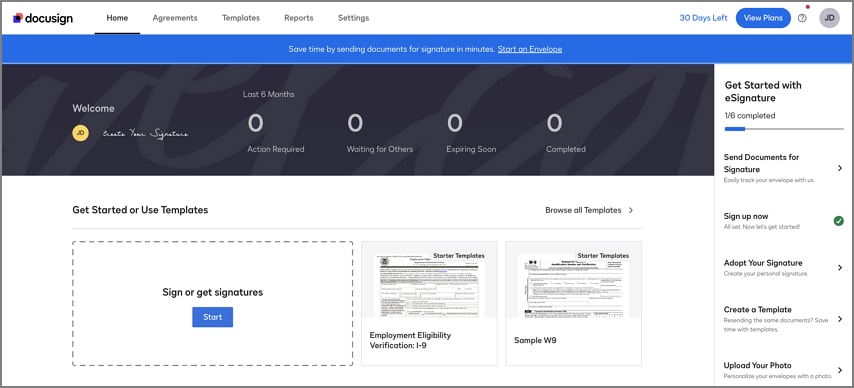
Using a platform like DocuSign allows you to manage multi-signer documents efficiently. Upload your PDF, place signature, initial, and date fields, and define recipients along with their signing order. The system handles reminders, tracks completion in real-time, and lets you export a sealed PDF with a certificate, providing a secure, legally recognized record of the transaction.
Cloud-Only Request
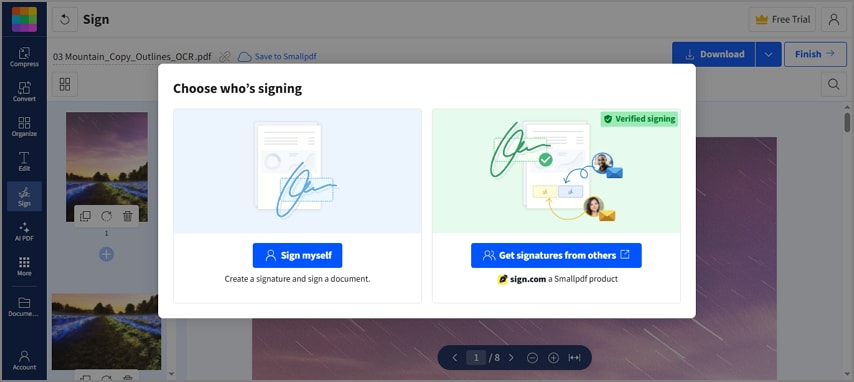
Cloud-based signature solutions are ideal for teams that prefer a fully web-based workflow. You can send PDFs, monitor signing progress, and access centralized audit logs without installing desktop software. These platforms ensure data security, maintain confidentiality, and comply with regional data residency requirements, making them suitable for remote teams and regulated environments.
G2 Rating: 4.5/5 |100% Secure
Part 6. Ensuring Legally Admissible E-Signatures
When learning how to request a PDF signature, following a governance checklist ensures that every e-signature is legally admissible and audit-ready. This approach protects your organization, maintains signer accountability, and preserves document integrity throughout the process.
- Identity Verification: Confirm signer identity through email, SMS, or stronger methods in line with policy to prevent unauthorized access.
- Intent and Consent: Make sure each recipient explicitly agrees to sign electronically, demonstrating clear intent and legal acknowledgment.
- Document Integrity: Use tamper-evident PDFs and downloadable audit reports to preserve authenticity and prevent unauthorized changes.
- Retention and Storage: Store the completed agreement and audit files securely in your document management system (DMS) with version control for compliance and future reference.
Part 7. Smart Field Design to Minimize Rework
Effective field design not only guides signers but also reduces errors and back-and-forth corrections. By thoughtfully setting up validation rules, helper text, and strategic markers, you ensure that PDFs are completed the first time. This saves time for both senders and recipients.
- Required Flags and Validation: When learning how to request a PDF signature, mark all mandatory fields and use format validation, such as date pickers or email checks.
- Helper Text and Visual Cues: Add instructions, arrows, or labels near signature blocks to clearly guide signers where action is needed.
- Page-by-Page Initials and Summary Acceptance: For long contracts, require initials on each page and include a summary checkbox to confirm full agreement, ensuring comprehensive completion and reducing follow-up questions.
Part 8. Reusable Micro-Copy for Signature Requests
Crafting clear, consistent micro-copy helps streamline the signing process and reduces confusion for recipients. Using pre-approved subject lines and email body text ensures professionalism and saves time when sending multiple documents for signature.
- Email Subject Line: Signature Request: [Document Name] Due [Date] – concise and informative, immediately communicates urgency and purpose.
- Email Body Text: "Please review and sign the PDF via the secure link. All required fields are highlighted. You will receive a copy and audit report upon completion." – provides clear instructions and reassures recipients about the process and document security.
G2 Rating: 4.5/5 |100% Secure
People Also Ask
-
How to request a signature on a PDF vs. how to send a document for an electronic signature?
Requesting a signature on a PDF usually refers to preparing the file with signature fields and sending it directly to recipients. Sending a document for electronic signature can involve a platform or workflow with tracking, reminders, and audit reports, which tools like PDFelement handle efficiently. -
How to add a signature request in PDF with multiple signers and reminders?
You can assign roles and place signature fields for each signer, then configure the signing order and reminder frequency. PDFelement allows you to automate reminders and track status for multiple recipients seamlessly. -
How to electronically sign a PDF from a phone?
Many PDF apps, including PDFelement's mobile version, let you open the PDF, tap the signature field, and sign directly on your device. The signed document can then be saved or sent back securely without a desktop. -
How to add DocuSign to a PDF if that's what our company uses?
Upload the PDF to DocuSign, place signature fields, define recipients and signing order, and send it for signature. While DocuSign is platform-specific, PDFelement also supports similar workflows for organizations that prefer an all-in-one desktop solution.
Brief Product Walkthrough: Desktop E-Signature Workflow
Learning how to request a signature on a PDF can be made easier when you follow a proper workflow. Following these steps ensures a smooth, compliant signing process while keeping you in control of every stage:
- Request eSign from the Protect Area Launch the send dialog, add recipients and CCs, configure signing order, and set reminder frequencies efficiently using tools like PDFelement.
- Drag-and-Drop Fields Place "Signature," "Initial," "Date," "Title," and "Company" fields onto the PDF and assign each to the correct recipient.
- Track Status and Notifications Monitor signing progress in the Agreements List, receive automatic email updates, and download the signed PDF along with a complete audit report.
- Validate Signatures Verify all collected signatures and review certificate details to ensure document integrity before filing.
Conclusion
To wrap it up, this article provided a complete guide on how to send a PDF for signature using different techniques. We explored preparing sign-ready PDFs, assigning fields and roles, sending signature requests, tracking progress, and validating signatures for compliance.
Additionally, alternative methods and governance best practices were highlighted to ensure legally admissible e-signatures. By following these steps and leveraging reliable tools like Wondershare PDFelement, you can streamline your document approval process and maintain secure records that stand up in legal situations.