
Table of Contents
An initial signature is one of those small document details that people often overlook until a contract, HR form, lease, or approval sheet asks for it. You may see a box marked "Initial here," a line next to a contract clause, or a request to initial every page of a PDF before adding your full signature at the end.
The confusing part is that initials can look like a signature, especially when they are stylized. Some people sign with initials only. Others use initials only for page acknowledgments. So, can your signature be your initials? Sometimes, yes—but the answer depends on intent, document wording, local rules, and how the initials are used.
This guide explains what an initial signature means, how it differs from a full signature, when initials may be acceptable, and how to create and place initials on PDF documents using a practical signing workflow.


 G2 Rating: 4.5/5 |
 100% Secure
What Is an Initial Signature?
An initial signature is a shortened signing mark made from one or more initials of a person’s name. Most often, initials come from the first letters of a person’s first, middle, and last names. For example, "Maria J. Bennett" may use "MJB," while "Daniel Chen" may use "DC."
In documents, an initial signature is usually used to show that a person has reviewed, acknowledged, or approved a specific page, paragraph, or clause. It is common in contracts where each page needs to be acknowledged, or where a particular term—such as a payment condition, confidentiality clause, or change in contract language—needs special confirmation.
An initial signature does not always replace a full signature. In many documents, initials support the full signature rather than serving as the main signing act. You might initial each page of a lease and then sign your full name on the final signature page.
Initial signature meaning in plain English
The simplest way to understand an initial signature is this:
An initial signature is a short version of your signing mark, usually made from your initials, used to confirm that you saw, reviewed, or accepted a specific part of a document.
That meaning can shift depending on the document. In a casual office approval workflow, initials may simply show who reviewed a draft. In a contract, initials may show that a party agreed to a specific clause. In an electronic signing process, initials may be captured along with the signer’s name, email address, timestamp, and audit trail.
If a document clearly says that initials count as acceptance, then an initials signature may carry more weight than it would in a casual setting. If the document does not say that, initials are usually treated as supporting marks rather than a substitute for a full signature.
Initial name examples
Initials are normally formed from the first letters of a person’s legal or commonly used name. Middle initials are optional unless the document or organization requires them.
Here are a few simple initial signature examples:
| Full Name | Common Initials | Possible Initial Signature |
|---|---|---|
| Jamal Cruz | JC | JC |
| Frank J. Maddison | FJM | FJM or F.J.M. |
| Mike Moses Master | MMM | MMM |
| Olivia Grace Lee | OGL | OGL or O.G.L. |
| Sarah Patel | SP | SP |
A person can also stylize initials so they look more like a handwritten mark. For example, "JC" may be written with connected letters, a slant, or a small underline. That style may help make the initials more personal, but the purpose matters more than appearance.
Where initials appear on documents
Initials usually appear in predictable places. You may be asked to place them at the bottom corner of each page, beside a handwritten correction, beside a key contract clause, or in a dedicated initials field in an eSignature form.
In business settings, employee initials are also used to track review and approval. For example, an internal policy document may show "Reviewed by: AT" or a quality-control form may include initials next to completed checks. These marks help identify the person responsible for a step in the process, but they are not always intended as legally binding signatures.
Signature and Initial: What's the Difference?
The difference between a signature and initial is mostly about purpose. A full signature is typically used to confirm identity and intent to be bound by the document. Initials are usually used to acknowledge a specific section, page, edit, or review step.
That said, the line is not always perfectly clean. A person may adopt initials as their regular signature. A contract may define initials as a valid signing method. An electronic signing platform may treat both signatures and initials as part of the same signing record.
A signature is a personal mark used to identify a signer and show intent. It may be a handwritten name, a typed name, a drawn electronic signature, a digital certificate-based signature, or even a mark such as an "X" in some circumstances.
Initials are abbreviated letters taken from a person’s name. They are shorter and less formal than a full signature in everyday document practice.
For example, if a contract asks someone to initial every page, the initials usually mean: "I have reviewed this page." If the contract asks someone to initial a specific clause, the initials may mean: "I specifically acknowledge this clause."
Initials are often placed in addition to a full signature. That is why you commonly see both signature and initial fields in the same document.
Signature vs initials: key differences
| Aspect | Full Signature | Initial Signature |
|---|---|---|
| Common purpose | Confirms identity and agreement to the document | Confirms review, acknowledgment, or approval of a section |
| Typical format | Full name, stylized name, typed name, or accepted signing mark | First letters of name, such as "AB" or "A.B." |
| Legal weight | Usually the main signing mark | Depends on context, wording, and intent |
| Placement | Signature page, agreement block, approval line | Page corners, clause margins, revision lines, initials boxes |
| Best use | Final approval, contract execution, formal consent | Page acknowledgment, clause confirmation, internal review |
| Can be electronic? | Yes | Yes |
The practical takeaway: a full signature usually carries the main legal responsibility, while initials help document smaller acknowledgments inside the signing process.
Can Your Signature Be Your Initials?
Yes, your signature can be your initials in some situations. A signature does not always have to be your full legal name written out. Many people use a shortened, stylized, or abbreviated signature in daily life.
The more important issue is whether your initials clearly show your intent to sign. If you place initials in a signature field, the document identifies you as the signer, and the surrounding evidence shows that you meant to approve the document, those initials may be treated as your signature.
Still, using signature initials only is not always the best choice. Some banks, government offices, employers, notaries, and counterparties may expect a full signature, especially for formal documents.
When initials may be accepted as a signature
Initials are more likely to work as a signature when the document or workflow makes the signer’s intent clear. For instance, if an electronic form says "Type your full name or initials to sign," then initials may be acceptable. If you normally sign with initials and the other party accepts that mark, it may also be valid in practice.
Initials may also carry legal meaning when they appear next to specific contract terms. For example, a lease may require a tenant to initial a clause about pets, late fees, or property condition. In that case, the initials do not necessarily replace the final signature, but they can show that the tenant specifically acknowledged that clause.
When a full signature is safer
A full signature is usually safer for contracts, financial documents, legal forms, employment agreements, real estate paperwork, and documents that may later need to be enforced or verified.
If the document gives separate fields for "Initials" and "Signature," do not treat them as interchangeable. Fill them out as requested. Initial the initials fields and sign the signature field. Leaving the full signature field blank because you already added initials could create confusion or delay approval.
For high-value or sensitive documents, follow the exact signing instructions. If a document says "sign full legal name," use your full legal name. If it says "initial each page," add initials where requested. If the instructions are unclear, ask the sender before signing.
A legal caution worth taking seriously
This article explains common document practices, not legal advice. Signature rules vary by country, state, industry, document type, and transaction. If you are signing a court filing, notarized document, real estate contract, loan agreement, will, healthcare directive, or anything with major legal consequences, ask a qualified legal professional or the receiving organization what they require.
For general business and PDF workflows, the safest approach is simple: use initials where initials are requested, and use a full signature where a signature is requested.
Initial Signature Examples and Common Use Cases
Initial signatures appear in many ordinary document workflows. The exact meaning depends on where the initials are placed and what the document says about them.
Initialing each page of a contract
Some contracts ask each party to initial every page. This is often done to reduce disputes over missing, replaced, or unread pages. If every page contains the parties’ initials, it becomes harder for someone to argue that a page was added later without review.
For example, a service agreement may include ten pages. Each page has a small initials line in the bottom-right corner. The signer initials pages 1 through 9 and signs the full signature block on page 10. In that setup, the initials support the final signature.
Initialing a specific clause
A document may require initials next to clauses that deserve special attention. These could include arbitration clauses, cancellation terms, automatic renewal language, confidentiality obligations, or payment penalties.
An initial signature example might look like this:
"Client acknowledges that cancellation requests must be submitted at least 30 days before renewal. Initials: ____"
By initialing that line, the signer confirms that they noticed and acknowledged the clause. The full signature at the end still completes the overall agreement.
Initialing a correction or change
Initials are often used when a printed document has a manual correction. Suppose a contract price is corrected from "$1,200" to "$1,100." Both parties may initial beside the correction to show that they accepted the edit.
This is also common in forms where a field is crossed out or updated by hand. The initials help show that the change was not made secretly after signing.
Initials in HR and workplace documents
HR teams often use initials for acknowledgments. An employee may initial next to policy sections covering confidentiality, equipment return, workplace safety, or training completion.
In these cases, the initials may not be the only legally meaningful mark. The employee may also sign a full acknowledgment at the end of the handbook or policy form. The initials simply make it clearer that specific sections were reviewed.
Initials in internal approvals
Outside legal contracts, initials are often used as a fast approval mark. A manager may initial an invoice, a supervisor may initial a checklist, or a reviewer may initial a document revision. These initials are useful for tracking responsibility, especially when several people handle the same file.
For digital teams, this is where PDF annotation and signing tools become useful. Instead of printing a document just to add two letters, reviewers can place initials directly on the PDF and keep the file moving.
How to Create and Add an Initial Signature to a PDF
Creating an initial signature for a PDF is not complicated, but it is worth doing neatly. A rushed or inconsistent initials mark can create confusion, especially if a document will be reviewed by another party.
A good initial signature should be readable enough to identify you, consistent with the name on the document, and placed exactly where the document requests it. If your name is "Alex Morgan," "AM" is usually clearer than a decorative mark that no one can interpret.
G2 Rating: 4.5/5 |100% Secure
Choosing an initial signature format
Before using an initial signature maker or initials signature generator, decide what style fits the document. For a formal contract, plain initials such as "AM" or "A.M." are usually better than an ornate logo-like design. For internal approvals, a simple typed or drawn initial is often enough.
You can create initials in several common ways:
- Type your initials in a clean font.
- Draw your initials with a mouse, trackpad, stylus, or touchscreen.
- Upload an image of handwritten initials.
- Use a saved electronic initials stamp inside a PDF editor.
Typed initials are easy to read. Drawn initials feel closer to handwriting. Uploaded initials are useful if you already use the same handwritten mark on paper.
Using PDFelement as an initial signature maker for PDFs
If the document is a PDF, PDFelement is a practical option for creating and placing initials without printing the file. This is useful when a contract asks you to initial several pages or acknowledge individual clauses. Instead of exporting pages, adding initials elsewhere, and trying to rebuild the document, you can open the PDF, create a reusable initials mark, and place it where needed.
PDFelement is especially helpful when initials are only one part of the document workflow. You can also add comments, fill form fields, edit text, organize pages, compress the final file, or convert the signed PDF if the recipient requires a different format. For scanned documents, OCR can make the text searchable before you review and initial it.
G2 Rating: 4.5/5 |100% Secure
Step-by-step: add an initial signature in PDFelement
Open the PDF in PDFelement. If the file is a scanned image, run OCR first so you can search and review the text more easily before signing.
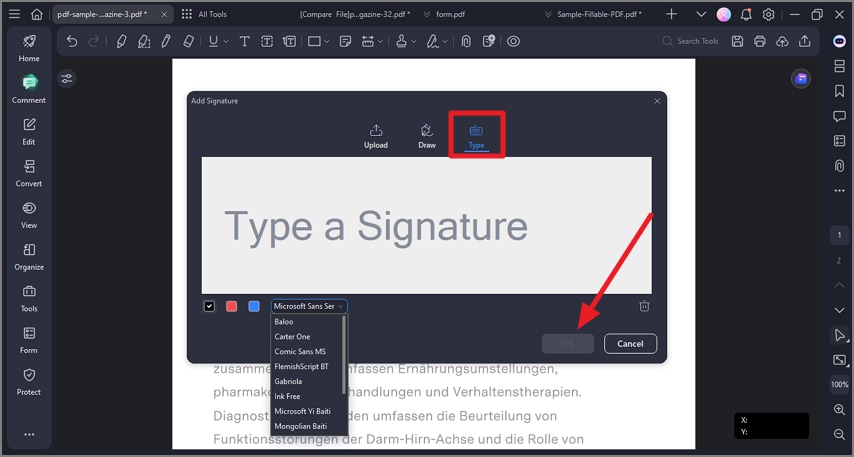
Go to the signing or commenting area and choose the option to create a signature or handwritten mark. Depending on your device, you can type your initials, draw them, or upload an image of your handwritten initials.
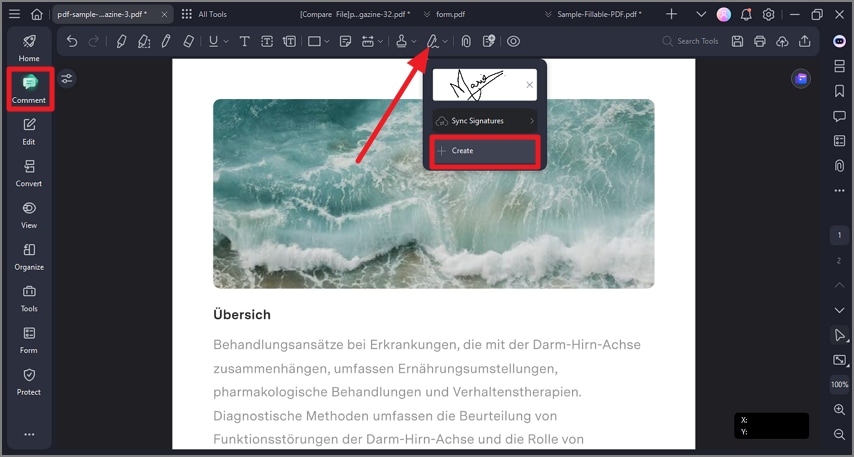
After creating the initials, save them for reuse if you need to initial multiple pages. Then drag the initials to the required field or page corner. Resize the mark so it fits the line without covering nearby text.
Review every required initials field before sending the document. This is a common place for mistakes: people sign the final page but miss one initials box in the middle of the file. If the document has several initials fields, use page thumbnails or search for "initial," "initials," or "initial here" to move through the file more carefully.
Finally, save a completed copy. If the document is important, keep both the final signed PDF and a record of how it was sent or approved.
Tips for Using Initials on Important Documents
Initials are small, but they can affect how a document is interpreted. A few habits can prevent avoidable problems.
Use the same initials throughout the document. If you start with "JTC," do not switch to "JT" halfway through unless there is a clear reason. Consistency helps reviewers connect the initials to the same person.
Place initials only where they are requested. Random initials in the margin may confuse the recipient or make the document look altered. If you want to comment on a clause, use a comment or annotation instead of placing initials casually beside it.
Do not rely on initials alone if the document asks for a full signature. This is the most common mistake. A field labeled "Signature" usually expects your normal signing mark, not merely the initials you used on earlier pages.
Read the wording around initials fields. A line that says "Initial to acknowledge receipt" may have a different effect from a line that says "Initial to accept this term." Small wording differences matter.
For shared PDF workflows, avoid flattening or compressing the document too early if others still need to sign. Finish all initials, signatures, form fields, and comments first. Then save or compress the final version for delivery.
People Also Ask
-
What is an initial signature?
An initial signature is a signing mark made from a person’s initials, such as "AB" or "A.B." It is commonly used to show that someone reviewed, acknowledged, or approved a specific part of a document. In many documents, initials appear alongside a full signature rather than replacing it. -
What is the difference between signature and initial?
A signature is usually the main mark used to confirm identity and agreement to a document. An initial is a shorter mark, usually made from the first letters of a person’s name, used for page review, clause acknowledgment, or internal approval. A document may require both a signature and initial fields. -
Can your signature be your initials?
Yes, your signature can be your initials if you use them with the intent to sign and the document or receiving party accepts them. However, some documents specifically require a full signature. If a form has a separate signature field, it is safer to use your normal full signature unless the instructions say initials are acceptable. -
Is a signature with initials only legally binding?
A signature with initials only may be legally binding in some situations, especially if the signer’s intent is clear and the document identifies the signer. But initials are often used only as acknowledgments, not as the main signature. For important legal or financial documents, follow the document instructions or ask a legal professional. -
What is an initial signature example?
A common initial signature example is placing "JM" at the bottom of each page of a contract for a person named Jordan Miller. Another example is writing "A.P." beside a specific clause to show that the signer acknowledges that term. In both cases, the initials help confirm review or acceptance of a particular part of the document. -
Should I use dots between my initials?
Either format can work. "AB" and "A.B." are both common. The best choice is the one that matches the document’s tone and stays consistent throughout the file. For formal documents, readability matters more than style. -
Can I use an initials signature generator?
Yes, an initials signature generator can help you create a clean initial mark for electronic documents. For PDFs, a PDF editor such as PDFelement is often more practical because it lets you create the initials and place them directly in the correct fields without changing tools. -
Do I need to initial every page of a contract?
Only if the contract asks you to. Some agreements require initials on every page to show that each page was reviewed. Others require only a final signature. If a document includes initials lines on each page, complete them before returning the file. -
Are electronic initials valid?
Electronic initials can be valid when they are used in a signing process that captures intent and identifies the signer. The rules depend on the document type and jurisdiction. For routine business documents, electronic initials are widely used, but high-stakes documents may have stricter requirements. -
Can I change my initial signature style later?
You can change how you write your initials, but consistency is better for active documents and recurring business workflows. If you are signing a set of related documents, use the same initials style across all of them to avoid questions about identity or approval.