
Table of Contents
A password-protected PDF can stop you at two different points: before you can view the file, or after it opens but still blocks editing, printing, copying, or page extraction. The fix depends on which kind of protection is being used. If you know the correct password and have permission to access the document, opening it is usually simple. If you do not know the password, your options are much more limited, especially for properly encrypted PDFs.
This guide explains how to open password protected PDF files in common apps, how to remove password protection from files you’re authorized to manage, when an online tool makes sense, and what to do when the password has been lost.


 G2 Rating: 4.5/5 |
 100% Secure
Why Some PDFs Are Password Protected
PDF passwords are used for contracts, invoices, tax documents, HR files, academic records, bank statements, legal paperwork, and other files that should not be freely opened or changed. Before choosing a method, it helps to identify the type of protection on the file.
Open password vs permission password
There are two common PDF security settings:
An open password blocks the document from opening at all. When you double-click the PDF, the viewer asks for a password before showing any page. If you do not enter the correct password, the content stays encrypted and unreadable.
A permission password lets the PDF open, but restricts what you can do with it. For example, you may be able to read the file but not print it, copy text, edit pages, fill forms, or extract images. Some PDF viewers show these restrictions under document properties or security settings.
This distinction matters. If your PDF asks for a password immediately, you need the correct open password. If it opens but features are disabled, you may be dealing with permission restrictions.
What you can and cannot do without authorization
For your own files, company documents you’re allowed to handle, or PDFs sent to you with permission, removing a password after opening the PDF can save time later. For someone else’s protected document, ask the owner for the password or an unrestricted copy.
A properly encrypted PDF with an unknown open password generally cannot be opened by ordinary PDF readers, browsers, or online unlockers. Be careful with any tool that promises instant access to every locked PDF without a password. At best, it may only remove editing or printing restrictions from files that are already viewable. At worst, it may expose private documents or produce damaged output.
How to Open Password Protected PDF Files When You Know the Password
If you have the correct password, the fastest method is to open the file in a PDF editor or viewer, enter the password, and then decide whether you want to keep or remove the security settings.
Open a password protected PDF with PDFelement
PDFelement is useful when you need more than basic viewing. After opening the secured file, you can edit text, annotate, convert the PDF, run OCR on scanned pages, organize pages, sign documents, compress the file, or remove password protection if you’re authorized to do so.
To open the file:
- Launch PDFelement.
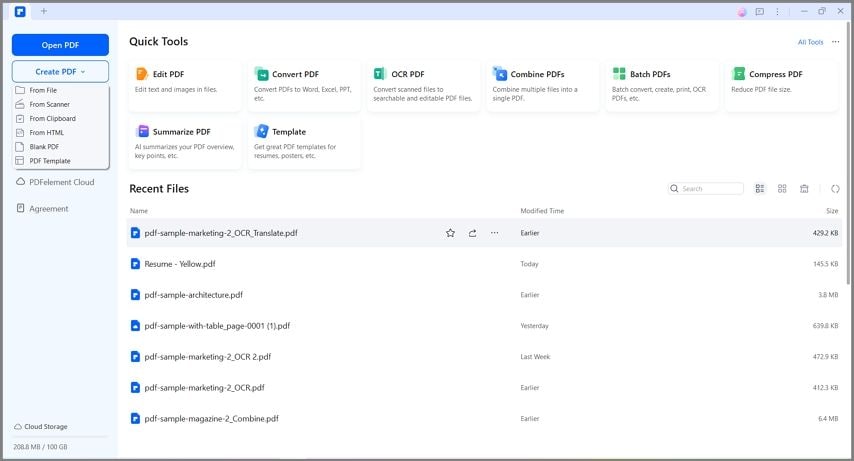
- Click Open PDF or the + button on the home screen.
- Select the password-protected PDF from your computer. You can also drag the file into the PDFelement window.
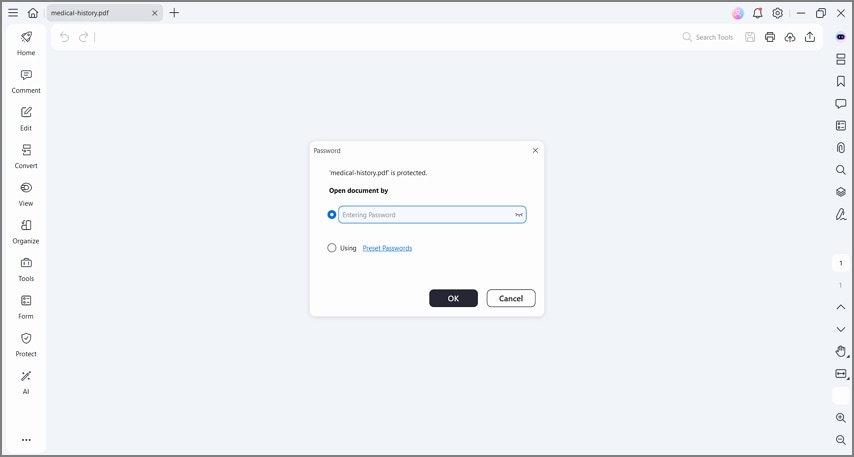
- If the PDF has an open password, enter the correct password when prompted.
- Once the file opens, review the document or continue with editing, conversion, signing, or other PDF tasks.
G2 Rating: 4.5/5 |100% Secure
If the file only has permission restrictions, it may open without asking for a password, but certain actions can still be blocked depending on the document’s settings.
PDFelement is a practical choice when a password-protected file is part of a larger workflow. For example, you may receive a locked contract, open it with the password from the sender, add comments, convert it to Word for internal review, or apply OCR if the file is a scanned copy. A basic PDF viewer can show the file, but it will not help much once you need to work with the content.
Open a PDF with password in Adobe Acrobat Reader
Adobe Acrobat Reader can open most password-protected PDFs if you know the password. It is a good option for simple viewing, printing when allowed, and filling forms.
To open the PDF:
- Open Adobe Acrobat Reader.
- Choose File > Open.
- Select the secured PDF.
- Enter the password in the prompt.
- Click OK to view the document.
If you need to remove the password or change security settings, you usually need Adobe Acrobat Pro rather than the free Reader. Adobe’s own help pages explain PDF security settings in more detail: Adobe Acrobat PDF security overview.
Open a locked PDF in Chrome or Microsoft Edge
Modern browsers such as Google Chrome and Microsoft Edge include built-in PDF viewers. They can open many password-protected PDFs as long as you know the open password.
To use Chrome or Edge:
- Open a new browser tab.
- Drag the PDF file into the tab.
- Enter the password if the browser asks for it.
- Read, print, or download the file depending on what the PDF permissions allow.
This method is convenient when you are on a computer without PDF software installed. It is not the best choice if you need accurate form handling, advanced annotations, redaction, OCR, page organization, or reliable editing.
Open a password protected PDF on Mac Preview
Mac users can use Preview for basic password-protected PDFs.
- Double-click the PDF, or right-click it and choose Open With > Preview.
- Enter the password when prompted.
- View or print the document if the file permissions allow it.
Preview can remember a password through macOS Keychain if you choose to save it. That can be convenient for personal files, but avoid saving passwords for sensitive work documents on shared computers.
How to Remove a PDF Password After Opening the File
If you own the document or have permission from the owner, removing the password can make the file easier to use in future workflows. This is common for archived invoices, internal forms, onboarding packets, or documents that were encrypted for transfer but no longer need password protection.
Remove PDF password protection with PDFelement
After you open the PDF with the correct password in PDFelement, you can change its security settings and save an unrestricted copy.
A typical workflow is:
- Open the secured PDF in PDFelement.
- Enter the password if prompted.
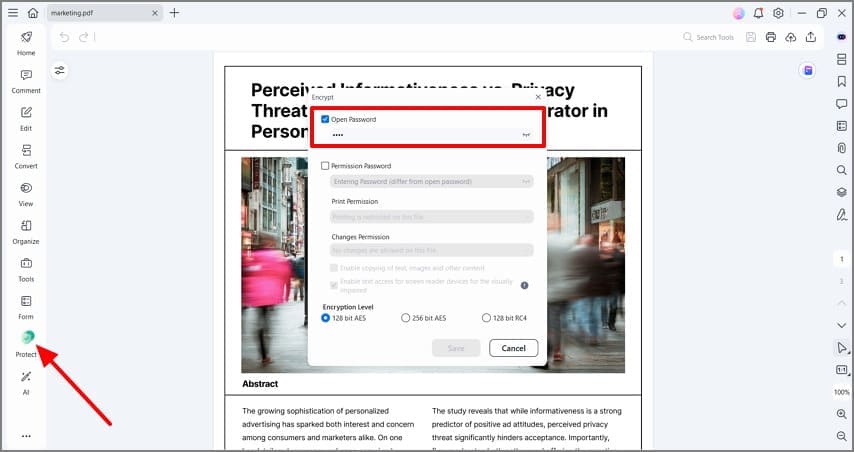
- Go to Protect and choose the encryption or password settings option.
- Clear the open password or permission restrictions you are authorized to remove.
- Save the PDF as a new file or overwrite the original if that is your intended workflow.
G2 Rating: 4.5/5 |100% Secure
Saving a new copy is often safer than overwriting the original. For legal, finance, or compliance documents, keep the protected source file until you confirm the new copy opens correctly and contains every page.
Remove password security with Adobe Acrobat Pro
If you use Acrobat Pro and have permission to modify the file, you can remove security from the PDF after opening it.
The usual path is:
- Open the PDF in Adobe Acrobat Pro.
- Enter the password.
- Go to File > Properties.
- Open the Security tab.
- Change Security Method to No Security.
- Enter the permissions password if Acrobat asks for it.
- Save the document.
The exact menu labels may vary slightly by Acrobat version, but the principle is the same: open the PDF first, then remove or change its security method.
Use Print to PDF carefully
Some readers try to remove restrictions by opening a file in Chrome, Edge, or another viewer and using Print > Save as PDF. This can work in limited cases where printing is allowed and the goal is simply to create a new viewable PDF copy.
It has drawbacks. Bookmarks, tags, form fields, comments, metadata, layers, and accessibility structure may be lost. Scanned pages may become image-based. Digital signatures can be invalidated. If the PDF blocks printing, this method will not work.
Use Print to PDF only for low-risk documents where layout fidelity and document structure are not critical. For contracts, signed files, forms, or regulated records, use a proper PDF editor and keep the original.
How to Open a Locked PDF Online
Online PDF tools are convenient when you are working from a temporary computer or do not want to install software. They can be helpful for files you own, files with known passwords, or documents with simple restrictions. They are not the right choice for every PDF.
Use an online PDF unlocker with the correct password
A tool such as HiPDF can help remove password protection from an authorized file once you provide the correct password. The general process is straightforward:
- Open the online PDF unlock or password remover page.
- Upload the protected PDF.
- Enter the correct password if required.
- Start the unlock process.
- Download the new PDF after processing.

This type of workflow is best for non-confidential documents, such as a sample form, public brochure, personal file, or document you can safely upload to a web service.
When online tools are not appropriate
Do not upload sensitive PDFs unless you are certain the service meets your privacy, legal, and company security requirements. That includes files containing:
Bank statements, tax forms, passports, IDs, medical records, payroll data, client contracts, legal case files, or trade secrets.
Documents covered by internal security policies, NDAs, GDPR, HIPAA, or other privacy obligations.
Files you do not own or do not have permission to modify.
For confidential PDFs, use a trusted desktop PDF editor and process the file locally. If you are in a workplace, check with IT or the document owner before removing password protection.
What to Do If You Forgot the PDF Password
Forgetting a PDF password is frustrating, but the next step depends on whether the file is yours, whether you have another copy, and whether the password is an open password or a permissions password.
Try legitimate recovery steps first
Before using any recovery tool, check the obvious places. Many PDF passwords are sent in a separate email, SMS, client portal message, or letter. Search your inbox for the sender’s name, the document title, “password,” “PDF password,” “passcode,” or “encrypted.” If the PDF came from a bank, government office, school, or employer, the password may follow a pattern such as date of birth, account number, ZIP code, employee ID, or the last digits of an identification number.
If someone else created the PDF, the cleanest fix is to request the password or ask for a new copy without restrictions. For business files, this is also the safest audit trail.
If you created the PDF yourself, look for earlier versions in cloud storage, email attachments, backups, or document management systems. Sometimes the unrestricted source file still exists as a Word document, Excel workbook, scan, or exported PDF.
Why some PDFs cannot be opened without the password
A PDF protected by a strong open password is encrypted. That means the content is not merely hidden behind a pop-up; it is mathematically scrambled until the correct password is supplied. A browser, PDF reader, or editor cannot simply “ignore” that requirement.
Some tools attempt password recovery using password hints, dictionaries, or brute-force guessing. Results depend on password length, complexity, encryption type, and whether you can provide clues. A short password you created years ago may be recoverable. A long random password may be unrealistic to recover.
For ethical and legal reasons, only attempt recovery on PDFs you own or have explicit permission to access.
Permission restrictions are different
If the PDF opens normally but blocks editing, copying, or printing, the situation is different. You may be dealing with permission restrictions rather than an unknown open password. Some PDF editors can remove or change these restrictions after you provide the owner password or if the file’s security allows it.
This is why identifying the lock type matters. A file that opens but refuses to print is not the same problem as a file that will not show a single page without a password.
After Opening the PDF: Edit, Convert, OCR, and Manage It
Opening the file is often only the first step. Many users search for how to open a locked PDF because they need to do something practical afterward: correct a typo, copy a clause, export tables, add a signature, combine pages, or send a smaller version by email.
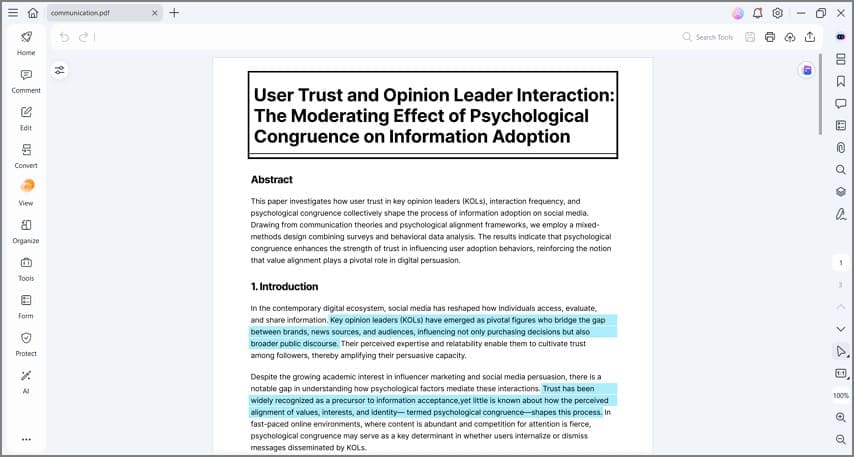
PDFelement fits this follow-up stage well. Once you open an authorized PDF, you can edit text and images directly, convert the file to Word or Excel when you need a working document, use OCR on scanned PDFs so text becomes searchable, add comments during review, fill and sign forms, compress large files, or organize pages before sending the final copy. That matters because password-protected PDFs often arrive as formal documents, and formal documents usually need careful handling after access is restored.
A practical example: suppose a vendor sends a password-protected invoice packet. After entering the password, you may need to extract one page for approval, add a note for the finance team, convert a table to Excel, and archive the final PDF. Doing all of that in one PDF editor is faster than opening the file in a browser, downloading it again, and switching between several tools.
People Also Ask
-
Can I open a password protected PDF without the password?
If the PDF has an open password and is properly encrypted, you generally need the correct password to view it. If the file belongs to you, try recovering the password from email, notes, backups, or the original sender. If it belongs to someone else, ask the owner for access. Be cautious with tools that promise to open any encrypted PDF instantly without a password. -
Why does my PDF open but still block printing or editing?
That usually means the PDF has permission restrictions. The document is viewable, but the owner has limited actions such as printing, copying, editing, commenting, or page extraction. If you have authorization, use a PDF editor such as PDFelement or Adobe Acrobat Pro to change the security settings after opening the file. -
Is it safe to upload a locked PDF to an online unlocker?
It depends on the document. For non-sensitive personal files, an online tool may be convenient. For contracts, financial records, IDs, medical documents, legal files, or work documents, use a local desktop tool instead. Uploading a confidential PDF to an online service may violate privacy rules or company policy. -
Can Google Drive open a password protected PDF?
Google Drive can store password-protected PDFs, and its preview may ask for a password for some files. However, support can vary depending on the PDF’s encryption and settings. Google Docs conversion may also change formatting, remove layout details, or fail with some secured files. For layout-sensitive PDFs, a dedicated PDF editor is more reliable. -
How do I open a password protected PDF on my phone?
On iPhone, try the Files app, Apple Books, or a PDF app that supports password prompts. On Android, try Google Drive, your default PDF viewer, or a dedicated PDF reader. Open the file, enter the password when prompted, and save a copy only if you are allowed to do so. For editing, OCR, conversion, or page organization, it is usually easier to work on a desktop PDF editor. -
Why is the password not working?
Check for uppercase and lowercase letters, extra spaces, keyboard language, copied invisible characters, and similar-looking characters such as O and 0 or l and 1. If the password was sent by email, copy it carefully or type it manually. Also confirm you are using the open password, not a permissions password intended only for changing security settings. -
Can I remove the password permanently?
Yes, if you know the correct password and have permission to modify the PDF. Open the document in a PDF editor, remove the open password or permission restrictions, and save a new copy. Keep the original protected version until you confirm the new PDF opens correctly and still contains the expected pages, formatting, comments, and form fields.