

In this article
- Why is Urdu OCR Challenging? (The Nastaliq Script)
- Part 1. Best Online Urdu OCR Converters (No Installation Required)
- Part 2. How to Scan Urdu Text From Images on Your Mobile Phone
- Part 3. How to Convert an Urdu Image to Text on Windows
- Part 4. Comparing the Best Urdu OCR Tools
- Part 5. Managing Multilingual Documents with PDFelement
- Conclusion
Have you ever found yourself staring at a screenshot of a beautiful Urdu poem, a scanned legal document, or an important notice, wishing you could just copy and edit the text? Because the text is trapped inside an image, your usual keyboard shortcuts won't work. Is manually typing out the words on a new document your only option?
Fortunately, modern technology provides a much faster solution. Using an Urdu OCR (Optical Character Recognition) tool allows you to convert a static image into editable, searchable text in a matter of seconds. Whether you are a student, a researcher, or a professional, finding the right image to Urdu text converter can save you hours of work.
In this comprehensive guide, we will introduce you to the best offline and online Urdu OCR tools available today, complete with step-by-step instructions on how to use them across different devices.
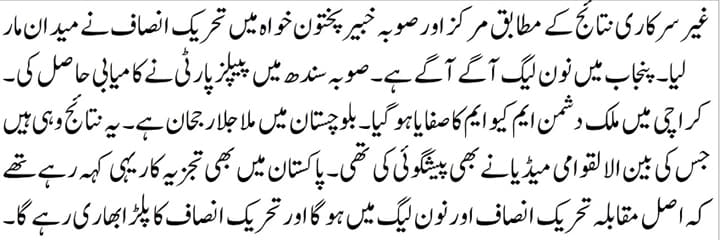
Why is Urdu OCR Challenging? (The Nastaliq Script)
Before we dive into the tools, it is helpful to understand why Urdu OCR is a specific, highly sought-after feature. Unlike Latin-based languages (like English or Spanish) where letters are printed separately side-by-side, Urdu is predominantly written in the right-to-left Nastaliq script.
Nastaliq is cursive, meaning characters change their shape depending on their position in a word (beginning, middle, or end). Furthermore, words are written diagonally, cascading downwards from right to left. This complex typographic structure makes it incredibly difficult for standard, basic OCR engines to accurately extract Urdu text from an image. Therefore, you cannot just use any generic text scanner; you need specialized software or AI-driven engines trained specifically to recognize the nuances of Urdu characters.


 G2 Rating: 4.5/5 |
 100% Secure
Part 1. Best Online Urdu OCR Converters (No Installation Required)
If you need a quick image to text Urdu conversion and don't want to download heavy software, web-based tools are your best bet. These platforms run in your browser and utilize cloud processing to deliver fast results.
1.1 i2OCR: The Free Web-Based Favorite
One of the most reliable online tools to convert Urdu images to editable text is i2OCR. It is widely considered one of the best web-based online Urdu OCR solutions because it is completely free to use. You don't need to purchase a license, sign up for a subscription, or even register for an account to access its core features. You simply open the website and start converting your files.
Supported Platforms: Windows, macOS, Linux, iOS, Android (via web browser)
Price: Free (Premium plan required for bulk OCR)
Step 1
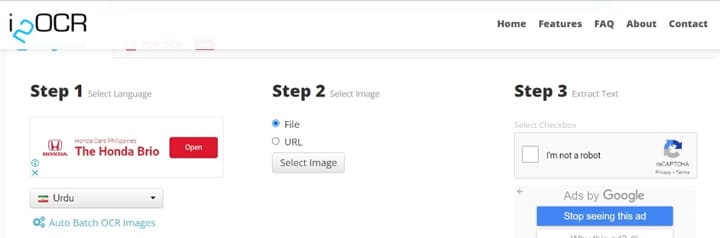
Navigate to the i2OCR website. Select Image OCR if your source file is an image format, or select PDF OCR if your scanned image is trapped inside a PDF document.
Step 2
Under the "Step 1" section on the screen, set the recognition language to Urdu.
Step 3
Click the Select Image or Select PDF button to browse your local files, and upload the image you want to convert to text.
Step 4
Check the captcha box that says "I am not a robot."
Step 5
If you uploaded an image, click Extract Text. If you are using a PDF, you must click PDF to Image first, and then click Extract Page Text.
Step 6
Wait a few moments for the cloud engine to process the translation. Scroll down the page to view the Urdu text extracted from the image. From there, you can copy it to your clipboard or download it as a Word document.
1.2 FastOCR: AI-Powered Online Converter
Another excellent alternative for an online Urdu OCR is FastOCR. Powered by an AI OCR engine, FastOCR is designed to analyze uploaded images, detect text regions accurately, and convert right-to-left characters into digital text.
Part 2. How to Scan Urdu Text From Images on Your Mobile Phone
Often, we capture photos of Urdu text—like a signpost, a newspaper clipping, or a handwritten note—directly with our smartphone cameras. In these instances, transferring the image to a PC is tedious. Thankfully, Google provides highly effective pic to Urdu text solutions built right into their mobile ecosystem.
2.1 Using Google Keep for Quick Extraction
Google Keep is primarily a note-taking app, but it features a hidden optical character recognition tool that works remarkably well for right-to-left languages.
Supported Platforms: Web, Android, iOS
Price: Free
Step 1
Install the Google Keep app from the Google Play Store or the Apple App Store.
Step 2
Launch the app and tap the Image icon at the bottom of the screen to create a new image note.
Step 3
Select Take Photo if you want to capture a new picture of a document, or choose Choose Image if the screenshot is already saved in your phone's gallery.
Step 4
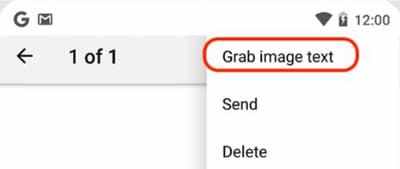
Once the image is uploaded into the note, tap on the image itself. Then, tap the kebab menu (the three vertical dots) in the top right corner, and select Grab image text.
Step 5
Google Keep will scan the image and paste the editable Urdu text directly into the body of your note below the image.
2.2 Using Google Lens for On-the-Go Translation
If you don't want to save a permanent note and just need to quickly copy text from a screenshot, Google Lens is the superior choice.
Step 1
Install Google Lens (or open the Google app which has Lens built-in) on your Android or iOS device.
Step 2
Launch the app and tap the camera icon located at the right end of the search bar.
Step 3
Select the image containing the Urdu text from your camera roll or point your camera directly at physical text.
Step 4
Wait a moment for Google Lens to process the image. Then, tap the Text option at the bottom of your screen.
Step 5
Google Lens will highlight the recognizable text over the image. You can use your finger to select the exact sentences you want to capture, and then tap Copy text.
Step 6
You can now paste the extracted Urdu text into WhatsApp, an email, or any other app.
Part 3. How to Convert an Urdu Image to Text on Windows
What if the image with Urdu text is saved on your Windows PC and you need to process highly technical documents offline? In this case, dedicated desktop Urdu OCR programs are the best solution.
3.1 Akhar 2016: Specialized Desktop Software
Developed by a research center in India, Akhar 2016 is a specialized piece of software designed specifically to handle regional scripts. Because it was developed with local linguistic nuances in mind, you can rely on Akhar's accuracy for standard typed documents.
Supported Platforms: Windows
Price: Free
Step 1
Download Akhar 2016 from its official website.

Step 2
Install and open the Akhar 2016 application, then navigate to Language Tools.
Step 3
Click on Optical Character Recognition from the dropdown menu, and select Urdu.
Step 4
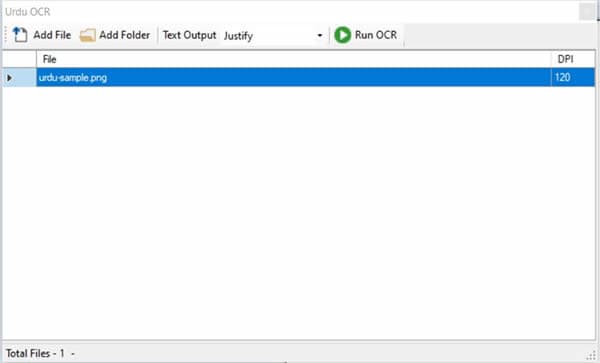
A system prompt will appear reminding you of the 300 DPI image requirements. Click OK.
Step 5
Click Add File, browse your computer, and select the image you want to convert.
Step 6
Finally, click Run OCR and wait for the software to generate your editable text.
Part 4. Comparing the Best Urdu OCR Tools
To help you decide which image to Urdu text converter is right for your specific scenario, we've compiled a quick comparison of the tools discussed above.
| Tool Name | Best For | Platform | Price | Internet Required? |
|---|---|---|---|---|
| i2OCR | Quick, free browser conversions | Web Browser | Free | Yes |
| FastOCR | AI-powered PDF extraction | Web Browser | Free | Yes |
| Google Keep | Syncing text between mobile & PC | Android, iOS, Web | Free | Yes |
| Google Lens | Instant copy/paste on mobile | Android, iOS | Free | Yes |
| Akhar 2016 | Offline, specialized document processing | Windows | Free | No |
If you are on your smartphone, Google Lens or Google Keep are undeniably the most convenient options. If you are on a desktop and have a stable internet connection, i2OCR is universally accessible and requires no installation. Akhar 2016, while slightly outdated, remains a powerful choice for those who strictly need an offline Windows environment.
G2 Rating: 4.5/5 |100% Secure
Part 5. Managing Multilingual Documents with PDFelement
While the tools listed above are excellent for tackling the specific challenges of the Urdu language, modern professionals rarely work with just one language or one file format. If you frequently handle business documents, invoices, or academic papers, you likely need a robust PDF editor that supports a wide variety of global languages.
If you need to perform OCR on documents in other languages, or if you need to heavily edit the layout of a scanned PDF, Wondershare PDFelement is a top-tier choice. PDFelement is a comprehensive PDF management suite that allows you to create, edit, merge, annotate, and secure PDF files with ease.
G2 Rating: 4.5/5 |100% Secure
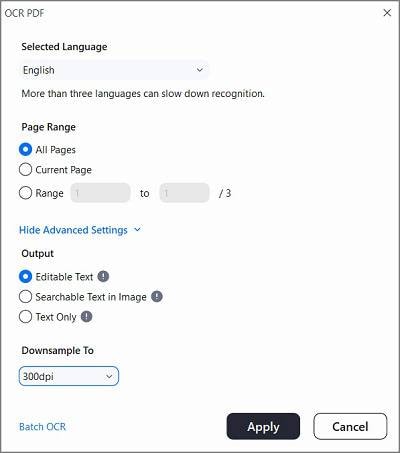
PDFelement boasts a highly accurate, built-in OCR feature that supports over 20 different languages, including English, Portuguese, Japanese, Spanish, German, Italian, French, Chinese (Simplified and Traditional), Korean, Russian, and Dutch. While it may not be your primary Urdu OCR tool, it is an indispensable asset for handling the rest of your international document workflow.
Step 1
Download, install, and open Wondershare PDFelement. Click on the OCR button on the main dashboard.
Step 2
Select the scanned PDF or image file you wish to convert to editable text.
Step 3
Choose between the two primary scan options: "Scan to editable text" or "Scan to searchable text in image."
Step 4
Select the specific page range you want to convert to save processing time (Optional).
Step 5
Under the language settings, select the correct language used in your PDF document to ensure maximum accuracy.
Step 6
Click Apply. PDFelement will process the document, and you will instantly be able to edit, highlight, and format the text.
Conclusion
Advancements in artificial intelligence and machine learning have made it easier than ever to extract Urdu text from an image. The days of manually typing out lengthy Nastaliq paragraphs from a screenshot are over.
When choosing the right Urdu OCR online or offline tool, consider your current device and your specific workflow. i2OCR and FastOCR are brilliant for quick web-based tasks. Google Lens is unmatched for mobile convenience, and Akhar 2016 serves those who need offline privacy. Finally, for comprehensive document management across dozens of other languages, integrating a professional tool like Wondershare PDFelement into your software toolkit will drastically improve your productivity.
People Also Ask
-
Can I use OCR on handwritten Urdu text?
Handwritten Urdu is incredibly difficult for standard OCR tools to read because individual handwriting styles vary greatly and the Nastaliq script is already complex. While tools like Google Lens might pick up highly legible, block-style handwriting, most OCR software (including Akhar 2016) is designed primarily for printed, computer-composed text. -
Is there a 100% accurate Urdu OCR tool?
No OCR tool is 100% accurate for any language, but this is especially true for Urdu. Accuracy depends heavily on the quality of your source image. To get the best results, ensure your image is high-resolution (at least 300 DPI), has high contrast (dark text on a light background), and is free from shadows or blurriness. You should always proofread the extracted text for minor errors. -
How can I translate the extracted Urdu text to English?
Once you have used an image to Urdu text converter to extract the editable text, simply copy the text to your clipboard. You can then paste it into translation services like Google Translate, DeepL, or Microsoft Translator to convert the Urdu paragraphs into English or any other language of your choice.