
Table of Contents
PDF metadata is easy to overlook until it causes a problem. A proposal may still show the wrong author. A downloaded report may display an old title in search results. A client-ready PDF may contain internal keywords or subject details you do not want to share. On a Mac, you can view some of this information with built-in tools, but editing or removing it usually requires a proper PDF editor.
This guide explains how to view PDF metadata on Mac, how to edit common fields such as title and author, and how to remove metadata from a PDF before sending it. It also compares several PDF metadata editor Mac options, including PDFelement, Adobe Acrobat, Foxit, and PDF Expert, so you can choose the right workflow for your file.


 G2 Rating: 4.5/5 |
 100% Secure
What PDF Metadata Means on a Mac
PDF metadata is information stored inside a PDF file that describes the document. It is separate from the visible page content, so changing the text on page one does not necessarily change the file’s title, author, or keywords. That is why a PDF can look correct when opened, but still show outdated details in Finder, search results, document management systems, or PDF reader properties.
The most common PDF metadata fields include the document title, author, subject, keywords, creator application, producer application, creation date, and modification date. Some PDFs may also include more advanced metadata based on XMP, a metadata standard used across many Adobe and publishing workflows. If you want a technical explanation of how metadata fits into PDF files, the PDF Association’s PDF specification resources are a useful reference.
For everyday Mac users, the most relevant fields are usually simpler:
Title: The document name shown in some PDF viewers and search systems.
Author: The person, account, or app that created the file.
Subject: A short description of the PDF’s purpose.
Keywords: Search terms used for organization, archiving, or discoverability.
Created and modified dates: Timestamps recorded by the file or application.
Metadata is useful when PDFs need to be cataloged, searched, or archived. It becomes risky when it exposes information that should stay private. For example, a contract may show the name of the original drafter, a résumé may carry metadata from an old template, or a public report may include internal project terms in the keyword field.
That is why the best workflow is simple: view the PDF metadata first, decide what needs to change, then save a revised copy and check it again before sharing.
How To View PDF Metadata on Mac
Before you edit PDF metadata on Mac, inspect what is already there. You may only need to confirm the author field, or you may discover that the title and keywords are wrong as well.
View Basic PDF Metadata in Preview
macOS Preview can show basic file and document information, though it is not a full PDF metadata editor. It is useful for a quick check.
Open the PDF in Preview, then go to Tools > Show Inspector or press Command + I. In the Inspector window, check the available tabs for document details. Depending on the PDF, Preview may show information such as title, author, subject, keywords, file size, page size, security settings, and creation or modification dates.
Preview is fine when you only need to view PDF metadata on Mac. The limitation is editing. Preview does not give you a full set of controls for changing PDF document properties, and it is not designed for removing all metadata before publication or client delivery.
If you find incorrect or sensitive information, move to a dedicated PDF editor instead of trying to work around Preview.
View Detailed PDF Properties in PDFelement
PDFelement for Mac gives you a more direct way to inspect PDF document properties. After opening your file, go to File > Properties. The properties window shows metadata fields such as title, author, subject, keywords, created date, and modified date, along with security and viewing information.
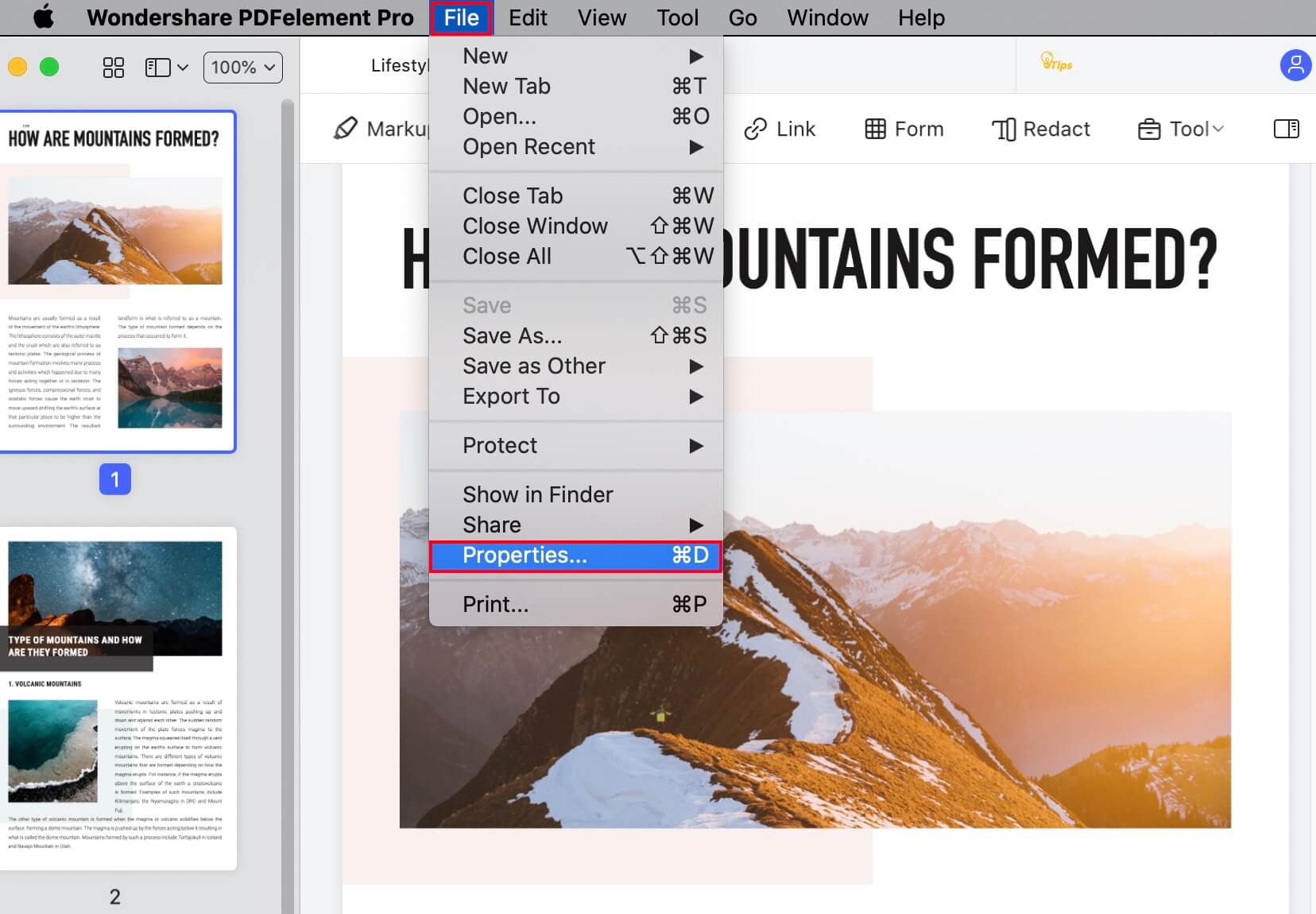
This view is useful because it places the editable metadata fields in one place. You do not need to rename the file in Finder or change visible text inside the PDF. The metadata lives in the document properties, and that is where you should update it.
For business documents, it is worth checking metadata as part of your final review. If you already review the PDF for typos, signatures, page order, and file size, add metadata to the same checklist. It takes less than a minute and can prevent embarrassing document details from traveling with the file.
How To Edit PDF Metadata on Mac With PDFelement
If your goal is to edit PDF metadata on Mac without dealing with command-line tools or technical XMP editors, PDFelement is the most straightforward option for common document properties. It is especially practical when you also need to edit text, add signatures, compress the file, run OCR, or convert the PDF after fixing its metadata.
For example, you might receive a scanned agreement where the author field is wrong, the title still says “Untitled,” and the file also needs searchable text. In that case, you can use PDFelement to run OCR, correct document properties, annotate the file, and save a polished copy from one workspace instead of switching between separate utilities.
G2 Rating: 4.5/5 |100% Secure
Step 1: Open the PDF in PDFelement
Launch PDFelement on your Mac and open the PDF you want to update. If you are editing a file that came from another person, a scanner, or a template, consider making a duplicate first. Metadata edits are usually simple, but keeping the original file gives you a clean fallback.
You can duplicate the file in Finder before opening it, or use Save As later to create a new copy after the metadata has been updated.
Step 2: Open the Properties Window
With the PDF open, click File > Properties from the top menu. This opens the document properties panel where you can view metadata and other file information.
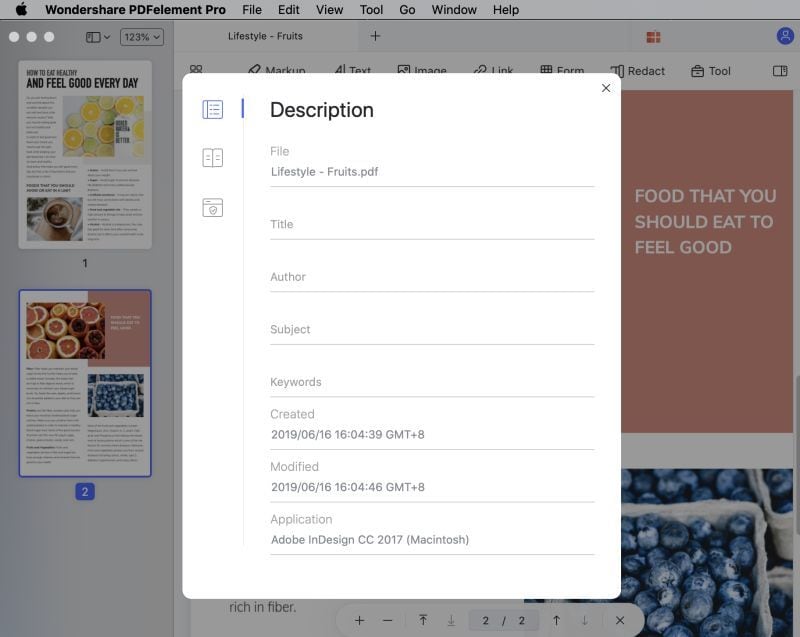
The description area is where you will usually make changes. You may see fields such as title, author, subject, and keywords. You may also see created and modified dates, which are typically generated by the file or application rather than manually rewritten like a title field.
Step 3: Edit the Title, Author, Subject, and Keywords
Click into the field you want to change and enter the corrected information. Keep the title short and recognizable. If the file is a client proposal, report, policy, invoice, or manual, use the actual document name rather than a vague label like “Final” or “New PDF.”
For the author field, use the name that should be associated with the document. That might be a person, department, company, or blank field depending on the purpose of the PDF. If you are preparing a document for external sharing and do not want personal account details included, remove or replace the author value.
The subject field should describe the file in plain language. Keywords are optional, but they can help with document management systems, internal archives, and search workflows. Avoid stuffing keywords into a PDF just for the sake of it. Metadata should help identify the document, not turn it into a messy list of repeated terms.
Step 4: Save and Recheck the PDF
After editing the metadata, save the PDF. If the file will be sent externally, use Save As and create a new copy with a clear filename. Then reopen the saved file and check File > Properties again to confirm the metadata appears the way you expect.
This final check matters. Some PDFs pass through multiple tools before delivery, and another export step can sometimes change producer or modified-date information. If you convert a Word document to PDF, edit it, compress it, or apply OCR, check metadata after the final operation rather than halfway through the process.
PDFelement is also useful after the metadata edit itself. You can protect the PDF with a password, add a digital signature, redact visible sensitive content, organize pages, compress the final file, or convert it to another format if needed. Metadata cleanup is often just one part of preparing a PDF for professional delivery.
How To Remove Metadata From PDF on Mac
Removing metadata from a PDF on Mac is slightly different from editing it. Editing means replacing incorrect values with correct ones. Removing means clearing fields so the file does not carry unnecessary identifying information.
This is common before sending legal drafts, public reports, academic submissions, client documents, or files created from reusable templates.
Remove Visible Document Properties
Open the PDF in PDFelement and go to File > Properties. In the metadata fields, select the information you want to remove. For example, you can clear the author, subject, or keywords fields by selecting the text and pressing Delete or Backspace.
After clearing the fields, save the document as a new PDF. A new copy is safer than overwriting the original, especially if the PDF is part of a larger project or review process.
The fields most users should check before external sharing are author, subject, keywords, and title. The title does not always need to be blank, but it should not expose internal wording. A title like “Acquisition Draft - Internal Comments” is not something you want attached to a public-facing PDF.
Check the Exported File
After saving, reopen the PDF and view its properties again. You can check in PDFelement, Preview, or another PDF viewer. The goal is to confirm that the fields you cleared did not return during export.
If the PDF will be uploaded to a court system, publishing platform, academic portal, or government website, also check that the filename itself does not expose private information. Metadata is only one layer. A file named ClientName_internal_review_with_notes.pdf can reveal more than the metadata fields.
For a quick macOS check, you can also select the file in Finder and use Command + I to view general file information. Finder will not show every PDF metadata field, but it helps confirm basic file details.
Be Careful With Hidden Data, Comments, and Redactions
Removing metadata does not automatically remove visible comments, annotations, form data, attachments, or text hidden under shapes. If a PDF contains tracked review notes, sticky comments, file attachments, or form entries, inspect those separately.
If you need to hide confidential text on the page, use a real redaction tool rather than drawing a black rectangle over the content. A rectangle may cover text visually while leaving the original text selectable or searchable underneath. The U.S. National Archives provides general guidance on redacting electronic records, and the same principle applies to PDFs: removal must be permanent, not cosmetic.
PDFelement can help with this broader cleanup workflow because you can review annotations, edit page content, apply redactions, and then revisit document properties before saving the final file. For sensitive legal, medical, financial, or government documents, consider your organization’s compliance requirements and use a dedicated sanitization workflow if required.
Best PDF Metadata Editor Mac Options
A good PDF metadata editor for Mac should make document properties easy to find, allow common metadata fields to be edited or cleared, and preserve the PDF layout after saving. The best choice depends on whether you only need metadata editing or also need broader PDF tools such as OCR, conversion, signatures, forms, redaction, and compression.
PDFelement for Mac
PDFelement is a practical choice for users who want to edit PDF metadata on Mac and continue working on the same file. It lets you open document properties, update fields such as title, author, subject, and keywords, and save the corrected PDF. The workflow is easy enough for routine office use, but it also sits inside a larger PDF editing environment.
G2 Rating: 4.5/5 |100% Secure
That matters because metadata changes often happen near the end of a document workflow. You may need to correct the title, then compress the file for email. Or remove the author, then add a signature field. Or run OCR on a scanned contract, then save it with a clean document title. PDFelement keeps these related tasks in one editor, which reduces the chance of creating multiple conflicting versions.
It is a strong fit for small businesses, students, freelancers, and teams that handle PDFs regularly but do not want the steep learning curve or cost of enterprise-level tools.
Adobe Acrobat Pro for Mac
Adobe Acrobat Pro is one of the most established PDF tools for Mac. It can view and edit document properties, work with advanced PDF features, create forms, apply redactions, run OCR, and prepare documents for professional workflows.
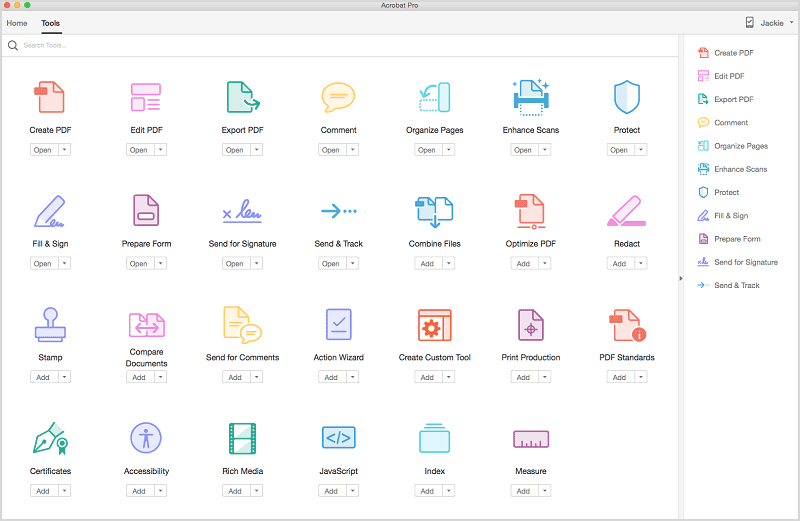
Acrobat is a good option if you work in an Adobe-heavy environment or need advanced prepress, compliance, or enterprise document features. It can be more than some users need if the main task is simply changing the title or removing an author name, but it remains a powerful choice for complex PDF handling.
Adobe also provides documentation on PDF properties and metadata, which is helpful if you need to understand how document properties behave in Acrobat workflows.
Foxit PDF Editor for Mac
Foxit PDF Editor is another capable PDF editor for Mac. It supports common PDF editing tasks such as document editing, annotations, forms, security, conversion, and metadata management.
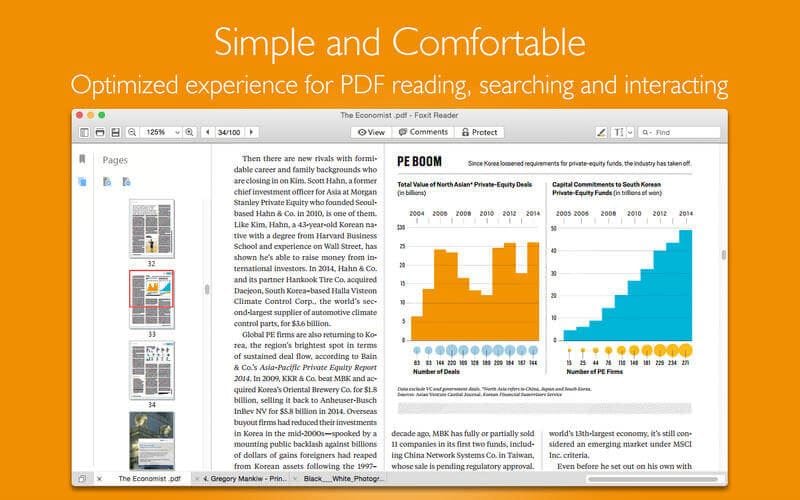
Foxit may suit users who want a full PDF editor with a familiar office-style interface. It is often considered by teams that need business PDF features but want an alternative to Acrobat. If metadata editing is part of a wider workflow involving forms, collaboration, or PDF protection, Foxit is worth comparing.
PDF Expert
PDF Expert is a Mac-friendly PDF app known for reading, annotating, and editing PDFs with a clean interface. It can be useful for users who work heavily in the Apple ecosystem and want a polished PDF experience for review and markup.
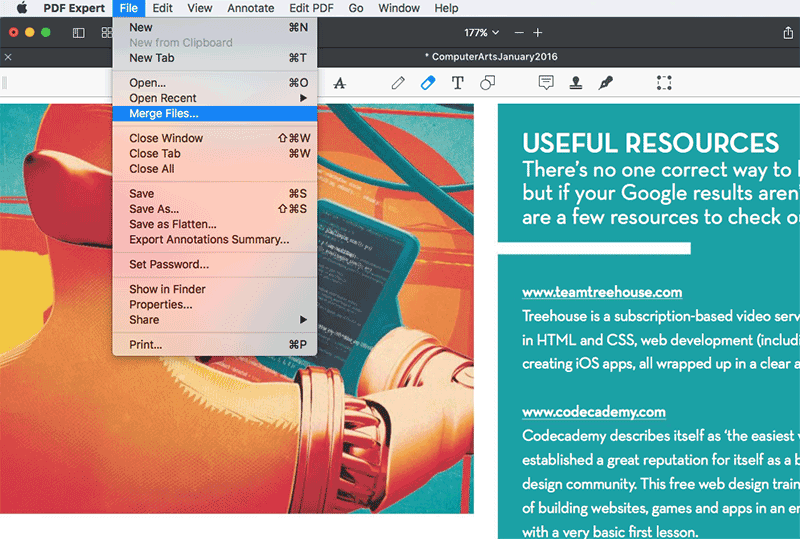
For metadata-specific work, check the version and feature set you are using, since PDF tools can differ in how much control they provide over document properties. PDF Expert is often strongest for reading, markup, page organization, and everyday PDF editing, while users with strict metadata removal or redaction requirements may prefer a tool with more explicit document inspection controls.
Metadata Tips Before Sending a PDF
Metadata cleanup is not difficult, but it is easy to do at the wrong time. If you edit metadata before the PDF is final, later exports may overwrite some fields. The safer habit is to check metadata after the final conversion, after OCR, after compression, and after any signing or security changes.
Use a clear title that matches the actual document. If the PDF is a report called “2025 Supplier Audit Summary,” the metadata title should say that, not “Microsoft Word - draft version 7.” This helps recipients, search systems, and document archives identify the file correctly.
For private sharing, remove personal author names if they are not needed. Many PDFs inherit the author from a computer account, Word profile, scanner account, or template creator. That detail may be harmless internally but inappropriate for external delivery.
Do not confuse metadata removal with full privacy protection. A clean author field does not remove visible comments, hidden layers, attachments, form entries, or sensitive text on the page. If the document contains confidential content, inspect the full PDF, apply proper redaction where needed, and check the final file in another viewer before sending.
If you manage many PDFs, develop a short final review routine: filename, visible title page, document properties, comments, signatures, permissions, and file size. A consistent routine catches more issues than relying on memory.
People Also Ask
-
Can I edit PDF metadata on Mac using Preview?
Preview can show some PDF information, but it is limited as a metadata editor. You can use it to inspect basic document details through Tools > Show Inspector, but for editing fields such as title, author, subject, and keywords, a dedicated PDF editor like PDFelement is usually a better choice. -
How do I view PDF metadata on Mac?
Open the PDF in Preview and press Command + I to open the Inspector. For a more complete view, open the file in PDFelement and go to File > Properties. There you can review document description fields, security information, and other PDF properties. -
How do I remove metadata from PDF on Mac before sending it?
Open the PDF in a PDF editor such as PDFelement, go to File > Properties, clear fields such as author, subject, and keywords, then save the PDF as a new copy. Reopen the saved file and check the properties again before sharing it. -
Does removing PDF metadata also remove comments and annotations?
No. Metadata fields and annotations are different parts of the PDF. Clearing the author or title does not remove sticky notes, highlights, comments, attachments, form data, or visible page content. Review and remove those items separately if the PDF contains sensitive information. -
What is the best PDF metadata editor for Mac?
For most users, PDFelement is a convenient choice because it combines metadata editing with PDF editing, OCR, conversion, signing, compression, and page organization. Adobe Acrobat Pro is strong for advanced and enterprise workflows. Foxit and PDF Expert are also useful depending on your preferred interface and feature needs. -
Why does my PDF still show the wrong title after I rename the file?
The filename and PDF title metadata are not the same thing. Renaming a file in Finder changes the filename, but the internal PDF title may remain unchanged. Open the PDF properties in a PDF editor and update the title field directly. -
Can PDF metadata include private information?
Yes. PDF metadata can include author names, software names, creation details, internal titles, subject descriptions, and keywords. Some PDFs may also contain comments, form data, attachments, or hidden content. If privacy matters, inspect the full PDF rather than only checking the filename.