
Table of Contents
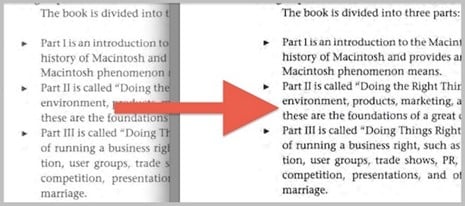
A PDF that looks pale on screen can be surprisingly hard to fix if you do not know where to look. Sometimes the text is faded because the document was scanned too lightly. Sometimes the page background is too gray. Other times, the file itself is fine, but your reader is displaying it in a low-contrast theme.
The right way to edit PDF contrast depends on what you need next. If you only want a more comfortable reading view, accessibility or reading mode settings may be enough. If you need to send, archive, or print a clearer document, you need a method that changes the PDF itself. This guide covers both approaches, including desktop PDF editors, Adobe tools, Mac Preview, Microsoft Word, and online options.


 G2 Rating: 4.5/5 |
 100% Secure
Why PDF Contrast Matters Before You Edit
Contrast is the difference between the dark and light parts of a page. In a PDF, that usually means the difference between text and background, but it can also affect stamps, signatures, diagrams, scanned images, screenshots, and handwritten notes.
Low contrast creates several common problems. A scanned contract may look washed out. A textbook page may have gray text on an off-white background. A form may print with weak lines. A report with colored charts may be readable on a monitor but unclear when printed in black and white.
Before choosing a PDF contrast editor, it helps to identify what kind of problem you are solving.
Viewing contrast is not always the same as editing the PDF
Some tools only change how the PDF appears on your screen. Adobe Reader’s accessibility color settings, for example, can make text darker while you read, but they do not permanently change the file for other people. That is useful for eye comfort, but it will not help if you email the PDF to a colleague and expect them to see the same contrast.
Other methods change the document itself. Adding or changing a background, applying a scan enhancement, exporting with a filter, converting to black and white, or using OCR can create a new file with improved readability. These workflows matter when you need a permanent result for printing, sharing, filing, or uploading.
What contrast editing can realistically fix
Contrast editing works well when the PDF has readable text or scanned content that only needs to be darker or clearer. It can also help when the background is distracting and you want to make the page easier to read.
It may not fully repair a badly scanned file. If the original scan is blurry, skewed, compressed, or missing parts of letters, contrast alone will not restore detail that is no longer there. In that case, use contrast adjustment together with OCR, rescan the original document if possible, or convert the file into an editable format for cleanup.
For accessibility-related reading needs, it is also worth checking general guidance from the Web Content Accessibility Guidelines, which explains why text contrast matters for readability.
Best Way To Edit PDF Contrast With a PDF Contrast Editor
A dedicated PDF contrast editor is usually the most practical choice when you need more than a temporary viewing change. It lets you open the PDF, adjust page appearance, run OCR on scanned content, edit text or background elements, and save a new file without moving between several apps.
PDFelement is a useful option for this workflow because contrast problems often come with other PDF tasks. A faded scan may also need OCR. A PDF prepared for printing may need compression afterward. A document that was converted from Word may need text edits, page organization, or annotations before sharing. Handling those steps in one editor is simpler than using separate tools for every change.
G2 Rating: 4.5/5 |100% Secure
How to edit PDF contrast in PDFelement
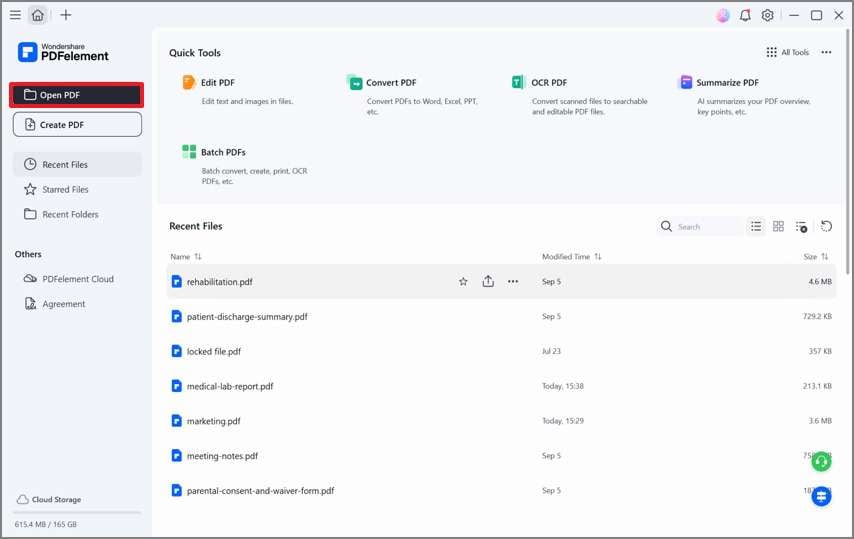
Start by opening the PDF in PDFelement. You can use the open-file command, drag the PDF into the program, or right-click the file and open it with PDFelement.
If the PDF is scanned, check whether the text is selectable. If you cannot highlight words, the page is probably an image-based scan. In that case, running OCR before deeper editing can make the document easier to search, copy, and correct. OCR will not magically improve every low-quality scan, but it is often the difference between a flat image and a workable document.
Next, look at the page background. A page that has a gray, yellow, or uneven background may appear lower in contrast than it needs to be. In PDFelement, go to the editing tools and use the background options to add or adjust a page background. You can choose a cleaner background color and adjust opacity so the text stands out more clearly.
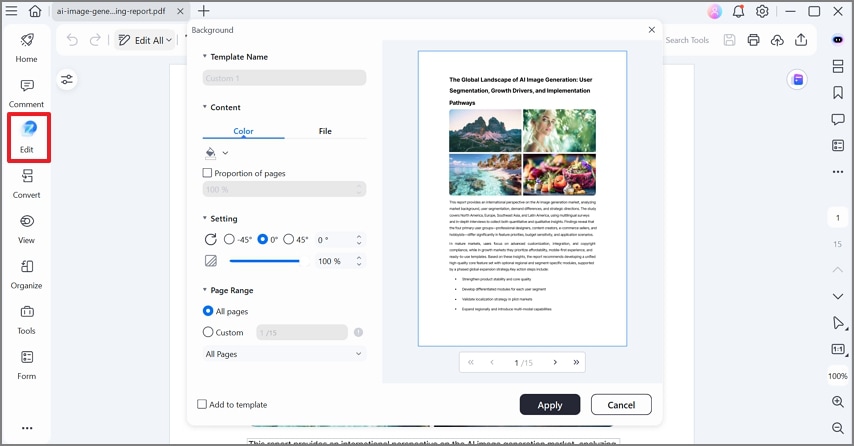
Use a light hand with background and opacity changes. Pure black text on a pure white background is usually the clearest for printing, but it is not always the most comfortable for long reading sessions. If you are preparing study material, a softer background may reduce glare. If you are preparing legal, medical, or business records, clarity and print fidelity matter more.
After adjusting the appearance, save a copy instead of overwriting the original. Use a clear file name such as contract-enhanced-contrast.pdf or scan-darkened-print-copy.pdf. Keeping the original file protects you if the edited version looks too dark on another screen or printer.
Use reading modes when you only need better on-screen contrast
Not every contrast issue requires editing the PDF itself. If the document is readable but uncomfortable, a viewing mode may solve the problem faster. PDFelement includes reading background options such as light, dark, parchment, and eye-protection-style views, depending on the version and platform.

This is best for long reading sessions, reviewing reports at night, or reducing screen glare. Since reading modes are display preferences, they are not the same as permanently changing the PDF contrast. Use them when you are the reader. Use editing, OCR, export, or scan enhancement when the file itself needs to look clearer for everyone.
Why PDFelement fits the broader contrast workflow
Contrast adjustment is rarely the only task. After making a PDF easier to read, you may need to annotate unclear sections, replace a page, extract pages, convert the file to Word, compress a large scan, or add a signature. PDFelement is helpful because it supports those follow-up steps in the same document workflow.
For example, a scanned invoice may need OCR so the invoice number can be searched. A classroom handout may need the background cleaned and then compressed before sharing. A contract may need clearer text, comments, and an e-signature. In these cases, a PDF contrast editor is not just a display tool; it becomes part of document cleanup and delivery.
G2 Rating: 4.5/5 |100% Secure
How To Change PDF Contrast With Adobe Tools
Adobe tools are common in business and academic settings, so they are worth considering if you already have them installed. The key is knowing which Adobe product you are using. Adobe Acrobat can edit and process PDFs more deeply. Adobe Reader is mainly for viewing and commenting, although it has useful accessibility settings.
Adobe Acrobat: use scan and color adjustment tools
Adobe Acrobat can help when a PDF scan looks too light or when image-based pages need cleanup. Open the file in Acrobat and look for scan enhancement or image adjustment features. Depending on your Acrobat version, these tools may appear under areas such as Scan & OCR, Enhance Scans, or editing-related menus.
A typical workflow looks like this:
- Open the PDF in Adobe Acrobat.
- Make a copy of the file before applying changes.
- Use scan enhancement or color adjustment tools to improve the page.
- Preview the result at normal reading size and at print size.
- Save the edited PDF as a new version.
Older and newer Acrobat interfaces do not always use the same menu names. If you cannot find “Enhance Scans,” search Acrobat’s tools panel for “Scan,” “OCR,” or “Enhance.” Adobe’s own Acrobat help pages are useful when the interface has changed after an update.
The main advantage of Acrobat is that it can create a permanent edited file. The drawback is that advanced editing features often require a paid Acrobat plan, and the options may be more than you need for a simple readability fix.
Adobe Reader: change contrast for reading only
Adobe Reader is a good choice if your goal is to make a PDF easier to read on your own screen. It is not the best choice if you need to permanently edit PDF contrast for printing or sharing.
To change the viewing contrast in Adobe Reader on Windows, open the PDF, then go to Preferences. Under Accessibility, look for the option to replace document colors. You can choose a high-contrast color combination or set custom colors for page background and document text.
This can make a pale document much easier to read, especially for long sessions. It is also useful for users who need a high-contrast viewing setup across many PDFs. The limitation is simple: these settings change your Reader display, not the PDF file itself. If you send the document to someone else, they will see the original contrast unless they use similar settings.
Use Adobe Reader when the problem is personal viewing comfort. Use Acrobat, PDFelement, Preview export, or another editing method when you need to create a clearer file.
How To Edit PDF Contrast on Mac and in Microsoft Word
You do not always need a full PDF editor for a basic contrast change. Mac Preview and Microsoft Word can help in specific situations, although both have limitations. They are best for quick fixes, simple documents, or cases where layout precision is not critical.
Mac Preview: apply the Reduce Lightness Quartz Filter
Preview is built into macOS and can apply a Quartz Filter when exporting a PDF. The filter commonly used for contrast-like improvement is “Reduce Lightness.” It can make light scans darker and easier to read.
Open the PDF in Preview, choose File, then Export. In the export window, look for the Quartz Filter dropdown and select Reduce Lightness. Save the file with a new name.
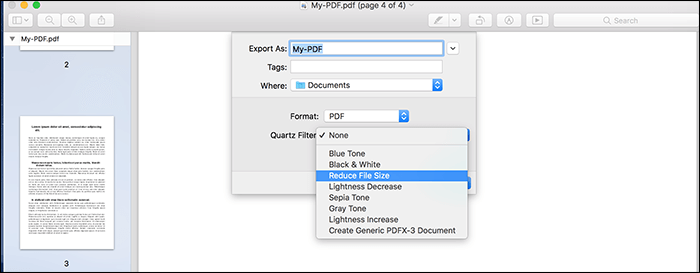
Preview is convenient because it is already on your Mac. It is also quick for short PDFs. Large scanned documents may take longer because Preview applies the filter page by page during export.
There are two caveats. First, the filter can make some pages too dark, especially if the PDF already contains photos, shaded tables, or colored graphics. Second, the exported file may be larger or visually different from the original. Always inspect several pages before relying on the result.
Microsoft Word: useful for simple PDF-to-Word cleanup
Microsoft Word can open many PDFs by converting them into editable Word documents. This can help if you want to change page color, clean up text, or adjust a simple document before saving it back as a PDF.
Open Word, choose File, then Open, and select your PDF. Word will warn you that it is converting the PDF into an editable document. After the file opens, go to the Design tab and use Page Color if changing the background improves readability.
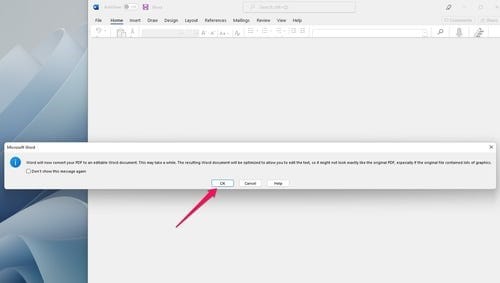
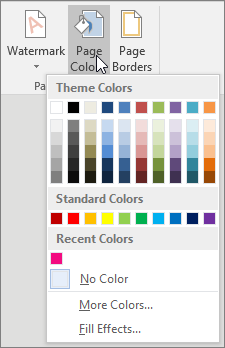
This approach is not ideal for complex PDFs. Multi-column reports, forms, brochures, tables, and heavily designed documents may shift during conversion. It is better for text-heavy files where layout is simple and the content matters more than exact formatting.
If you need to preserve layout, use a PDF editor instead. If you need to rewrite or reformat the content anyway, Word can be a practical detour.
How To Edit PDF Contrast Online
Many people search for an online PDF contrast editor because they want a quick fix without installing software. Browser-based tools can be convenient, especially for non-sensitive files. The challenge is that true contrast editing is less common online than related actions such as converting a PDF to grayscale, black and white, or image files.
Some online tools let you upload a PDF and convert colored pages to grayscale or black and white. This can make text and line art clearer, especially before printing. Others let you edit brightness, contrast, or image settings after converting PDF pages into images. The result may be acceptable for scanned pages but less ideal for text-based PDFs because the output can become image-heavy.
When an online PDF contrast editor makes sense
Use an online tool when the file is not confidential, the task is simple, and you need a quick output. A class handout, public flyer, old manual, or non-sensitive scan may be fine for an online workflow.
Search terms such as “edit pdf contrast online,” “online pdf contrast editor,” or “pdf contrast editor online” often lead to tools that perform one of these actions:
- convert the PDF to grayscale or black and white;
- adjust page image brightness and contrast;
- compress or optimize the converted PDF after processing;
- let you preview and download a changed version.
Read the tool’s privacy and deletion policy before uploading anything personal. Avoid online editors for tax records, contracts, medical files, HR documents, unreleased business reports, IDs, and legal evidence. For those files, a local desktop editor is safer because the document does not need to leave your device.
Expect trade-offs with browser-based tools
Online contrast changes can flatten a PDF. That means selectable text, layers, form fields, or vector graphics may become image-based pages after processing. This is not always a problem, but it matters if you need searchable text, small file size, or editable content.
If you use an online tool and the output becomes too large, run compression afterward. If the text is no longer searchable, use OCR. If the layout changes, return to the original and use a desktop PDF editor instead.
Online tools are best treated as quick utilities, not as the main workflow for valuable documents.
How To Choose the Right PDF Contrast Method
The best method depends on the file type and what you need to do with the result. A faded scan, an uncomfortable reading view, and a print-ready business document should not be handled the same way.
For a scanned PDF that needs to be clearer and searchable, use a PDF editor with OCR. Adjust the appearance, run OCR, then save a clean copy. For a PDF that only looks bad on your screen, try accessibility color settings or a reading mode first. For a Mac-only quick fix, Preview’s Reduce Lightness filter is often enough. For a simple text document that can tolerate reflow, Word may work. For a non-sensitive one-time task, an online PDF contrast editor can be the fastest route.
Quick decision guide
Need a permanent edited PDF: use PDFelement, Adobe Acrobat, Mac Preview export, or a reliable online processor.
Need better personal reading contrast only: use Adobe Reader accessibility settings or PDF reader themes.
Need to fix a scanned document: use OCR plus contrast/background cleanup.
Need to print a clearer copy: test one page first before processing the whole file.
Need to protect private information: avoid online upload tools and work locally.
Tips for better results before printing
Do not judge contrast only at zoomed-in screen size. A page can look dark enough at 150% zoom but still print too lightly. Print one test page, preferably one with small text, signatures, stamps, or table lines.
If the PDF includes photos or shaded graphics, avoid aggressive black-and-white conversion unless text clarity is more important than image quality. For forms and contracts, stronger contrast is usually helpful. For reports with charts, too much contrast may crush details in colored areas.
Also check file size after editing. Scan enhancement, image conversion, and filters can increase PDF size. If you need to email the result or upload it to a portal, compress the final PDF after confirming the contrast is acceptable.
Finally, keep your original. Contrast edits are often destructive, especially when filters or image conversions are involved. A clean original gives you a safe starting point if the first output is too dark, too large, or no longer searchable.
People Also Ask
-
How do I edit PDF contrast permanently?
Use a PDF editor or export method that changes the file itself. PDFelement, Adobe Acrobat, Mac Preview’s export filters, and some online tools can create a new PDF with adjusted appearance. Reader display settings are not permanent because they only affect how the file looks on your device. -
What is the easiest PDF contrast editor for scanned documents?
For scanned PDFs, use a PDF editor that also supports OCR. PDFelement is a practical choice because you can open the scan, improve page appearance, run OCR, and then save or convert the file. OCR is especially useful when the scan needs to become searchable or editable after contrast cleanup. -
Can I edit PDF contrast online for free?
Yes, some online tools can convert a PDF to grayscale, black and white, or adjusted image-based pages. This may improve readability. Be careful with private files, though. If the PDF contains sensitive personal, legal, medical, or business information, use a desktop tool instead of uploading it to a website. -
How do I darken a PDF for printing?
Use a method that creates a darker saved copy, not just a reading mode. You can use a PDF editor, Adobe Acrobat scan enhancement, Mac Preview’s Reduce Lightness filter, or an online conversion tool. Print one test page before processing or distributing the full document. -
Why does my PDF look fine on screen but print too light?
Screens use backlighting, while printed pages depend on ink, toner, paper, and printer settings. Thin gray text, low-resolution scans, and pale form lines may appear acceptable on screen but weak on paper. Increase contrast, choose black-and-white printing when appropriate, and test print a page with small text. -
Can Adobe Reader increase PDF contrast?
Adobe Reader can increase contrast for viewing through Accessibility settings, such as replacing document colors with high-contrast combinations. This does not permanently edit the PDF. Other people will not see your Reader settings unless they apply similar settings on their own device. -
Does changing the PDF background improve contrast?
It can. If a page has a gray, yellow, or distracting background, changing or cleaning the background can make text easier to read. This works best when the text itself is already clear. If the text is faded or part of a poor scan, you may also need OCR or scan enhancement. -
Will contrast editing make my PDF searchable?
Not by itself. Contrast editing changes appearance. To make a scanned PDF searchable, you need OCR. A good workflow is to improve the scan enough for OCR to recognize the text, run OCR, then review the output for errors. -
What should I avoid when using an online PDF contrast editor?
Avoid uploading confidential files, and watch for output quality issues. Some online tools flatten the PDF into images, remove searchable text, increase file size, or alter layout. Always download and inspect the result before deleting your original file.